2025 was a challenging year, both personally and in the world at large. It was a year that required deep self-reflection, healing, support from friends, and quiet inner work. As a result I took a long pause from posting on social media and tending to an online presence. During the year I took time to rest and create art. Looking ahead I intend to be a little more active online but will also be navigating a move to New England. Thanks for checking in — you can keep in touch with me on Instagram and BlueSky.
A Card Spread to Celebrate the Opening of the Lion's Gate Portal
Here's a card spread for any astrologically and metaphysically minded readers that are looking for inspiration during the Lion's Gate Portal opening. The Lion’s Gate Portal is said to be open between July 28th and August 12th and is observed when the star Sirius aligns with the Sun in Leo. Some will say that the strongest time to feel the transformative and cosmic energy of the Lion’s Gate is on 8/8, but pay attention to your dreams and feelings during this entire annual period: some people say that they feel drained, extra sensitive, and/or extra intuitive during this time. It may be different from you - you may feel joy, eagerness, crankiness, or nothing at all. Take daily notes between 7/28 and 8/12 that plot out your moods, experiences, and what you are most inspired by in the moment. You can do even do this every year, making it a useful tool to uncover repeating moods and patterns during this period.
Each card represents symbolism or themes of the Lion’s Gate Portal — a time between 7/28 and 8/12 that honors the star Sirius aligning with the Sun in Leo. This is believed to be a powerful time for spiritual growth, personal transformation, and dream manifestation. Here’s a breakdown of the “why” behind the symbols and themes used in this spread:
The Numerology of 8: The numerology of 8 plays a big role in the Lion’s Gate Portal, and it is thought by some that the most powerful day to work with the Lion’s Gate lands on 8/8. The number 8 represents being focused, driven, and empowerment. Because 8 bears the shape of the lemniscate (infinity sign), many consider the 8 to represent cycles and balance between the material and spiritual worlds. In this sense the numerology of 8 allows us to review our goals and determine what is valuable to focus on right now for both our physical and spiritual wellness.
Astrology of Leo: The Lion’s Gate occurs during Leo season, giving the event its namesake. Leo’s energy is bold, determined, confident, and ambitious. Leo season allows us to express ourselves with confidence. Leo is all about being confident, creative, and outgoing. In this sense the astrology of Leo offers us ways to awaken our ambitions, follow our passionate callings, and express ourselves with confidence.
Personal Evolution: The Lion’s Gate season is said to be a time of personal evolution. Sometimes I think “personal evolution” is a cool way of saying “doing some intense work to overcome challenges, heal, and move forward for something better.” This time can allow significant changes to take hold in your life, perhaps giving you a space safe to “do the work” and lean into your emotions.
Manifestation Magic: This is considered to be a beneficial time for manifesting great things in your life. When looking forward, and seeing a prosperous outcome from a goal or plan, set your sights high. During the Lion’s Gate Portal there is no need to think small or put limitations on what you can bring into your reality.
Star Sirius: Sirius is the brightest star in our sky and is one of the stars in the constellation Canis Major. For the Ancient Egyptians, the rising of Sirius in the early morning skies in summer marked the flooding of the Nile and the replenishment of nutrients to crops: this was the marking of a new cycle of life. Modern-day spiritual practitioners associate Sirius with knowledge, ancient wisdom, and for some, a link to highly intelligent life beyond our planet.
DNA Activation: DNA Activation is another modern and metaphysical belief that suggests there are aspects of our DNA that lie dormant, derived from scientific studies that nonencoding proteins DNA called “Junk DNA” are inactive, and can be activated to support in healing. (Note: Please feel free to keep me honest, I’m an awful science student.) Some metaphysical and spiritual students believe that activating DNA can help heal the body and awaken extra-sensory abilities. Different techniques for DNA activation include mediation, listening to 528HZ frequencies, and positive visualization exercises. Whether this is something you hold true to your heart or not, it is still a valuable astrological time for self-improvement and healing. There is never any harm in meditation and chilling out to the sound of singing crystal bowls.
Akashic Records: Akashic Records are kind of like the Master Repository of the Universe, being a sort of spiritual log of everything that has ever happened in the universe. There are many who believe individuals can tap into this collection of records, and in doing so, gain deeper understanding of events that happened in this life and even in past lives. Therefore, working within the Akashic Records, we are said to heal our past wounds, better understand life lessons, and even realize our soul’s mission and desires.
Portal Opening: In a spiritual or esoteric sense, a portal can be seen as a gateway between two worlds or two realities. A portal can shift us out of our third dimensional experience into something Otherworldly, supernatural, and/or cosmic. For some, the portal can feel like a special place in our world that acts like a gate for spiritual experiences (think of the carved door Aramu Muru near Lake Titicaca). And, much like the Lion’s Gate, the portal can be something that resides in the spiritual world; a mystical space that we access through magic, astrology, spirituality, astral projection, and so on. By walking through the portal we allow ourselves the opportunity to access information on a psychic level, to make both deeper and wider observations of the universe, and to open our hearts up to potential within ourselves and with magic.
Image from Unsplash by Nikolay Petrov
Energy, Rewards, and Gratification: The Magic of the First Harvest on Lughnasadh
The holiday of Lughnasadh, also known as Lughnasa or Lammas, marks the midpoint between the Summer Solstice and the Fall Equinox. This may be categorized as one of the “lesser known” sabbats, and much like its Wheel of the Year counterpart Imbolc, it is sometimes overlooked. Maybe it’s because people are already getting geared up for autumn and looking ahead to Mabon and Samhain. Maybe because it’s hard for people today to see how Lughnasadh traditions fits into the modern cycle of celebrations. Or maybe it’s because the name is challenging to read and say Lughnasadh (LOO-nuh-suh or LOO-nah-sah). But for me, it is a bountiful day, a pleasing time of year, and just as valuable of a magical gateway within the Wheel of the Year as any other sabbat celebration.
Lughnasadh is commonly celebrated on August 1st in the Northern Hemisphere or February 1st in the Southern Hemisphere. Some will celebrate it when the Sun is at 15 degrees in Leo. August signifies the waning weeks of summer, a finale to a season of bright and long days often enjoyed outdoors. For those who are in school, August could feel like a countdown, where students savor the final days of calendrical freedom before returning to classes. Lughnasadh is honored as the first harvest holiday of the year, where we welcome the earth’s maturation and a season of plentifulness. Sweet peaches, tempting tomatoes, satisfying squashes, inviting blackberries, and luscious plums are just some of the fruits and vegetables that are abundant in our August gardens and orchards. The decadence and variety in flavors available at Lughnasadh make for a feast that is a delectable experience, with plenty to share with those we love. Lughnasadh is a time in which we also reflect with graciousness and gratitude for the sacrifices made by the land and seasons for our continued wellness and strength. The crops must be cut for our sustenance and the sun's strength weakens as we advance towards the cooler and darker seasons. But the cold is not with us quite yet.
Image from Unsplash by Miss MV
Harvest Traditions and Celebrations in the Dog Days of Summer
At this time of the year many festivals were held to celebrate sports, compete in games, and enjoy contests. In some places these harvest celebrations started in mid-July and went through mid-August. In Ireland, bonfires would be lit, and outdoor feasts would take place. Rituals and sacrifices would be held to ensure bountiful harvest. The retelling of Lugh’s tales would be shared, and sporting competitions would be held. In the Scottish Highlands, rites were performed to bring protection to animals and homes. Races were held and sports were played. Wells were visited on the Isle of Man because they were said to have increased healing powers at this time of year. British Lammas was an important holiday through medieval times when festivals were held, elections took place, and bills were paid. Robert Burns translated and published a poetic translation in 1782 of a famous ballad that features the character John Barleycorn and the well-known line “John Barleycorn must die.” John Barleycorn, a spirit of barley crops, was honored and sacrificed. His sacrifice was not only valuable for the cycle of life to continue, but also to transform the grains into whiskey and ale.
Lughnasadh offers astronomical events worth spending an evening outside to observe and honor. The Perseid Meteor Shower is visible for many in the Northern Hemisphere between mid-July and mid-August. The star Sirius, located in the constellation Canis Major, also reappears in the heavens as it rises in the pre-dawn sky in late summer. The reappearance of Sirius, the brightest star in our sky, is where the expression "dog days of summer" emerged. Ancient Greeks believed the heat generated by Sirius aided in the sweltering heat at this time of the year. Ancient Egyptians celebrated the rising of Sirius, as it marked the season of the flooding Nile. The Ancient Egyptians believed that the flooded waters of the Nile were connected to Isis' tears, who mourned the loss of her husband Osiris. In this way, we see the sacrifice of the land and the perpetual motion of life, death, and rebirth in season of Lughnasadh.
Lugh and Lughnasadh’s Namesake
Lughnasadh is named after the Celtic God Lugh, who has taken on the role of a Sun King, though he is known as a master of all human skills. His name means “the Shining One,” and he is said to be a clever magician, wise poet, masterful warrior, skilled blacksmith, and king of the Tuatha de Danann. This holiday is as much about Lugh’s adoptive mother Tailtiu, who in legend, clears the plains that will serve as agricultural land in Ireland. She dies from exhaustion due to her challenging chores, but her sacrifice allows for others to sustain. Lugh was said to have introduced the celebrations of Lughnasadh in honor of Tailtiu.
Modern Magic to Honor the Spirit of Lughnasadh
There are plenty of ways, simple or extensive, to celebrate the spirit of Lughnasadh:
Image from Unsplash by Monika Grabkow
Kitchen Magic: One powerful way to honor the spirit of Lughnasadh is to spend time cooking and/or doing magic in the kitchen. Lughnasadh marks a time of plenty. Gardens and farms are lush and producing, giving modern day pagans and witches the opportunity to visit and celebrate seasonal foods at local farmer’s markets. Use this time of year to reflect on the cycle of food and the wonderful options in a grown-in garden. Since this is a holiday that honors grain, you may want to try your hand at making bread at home. If you are anything like me and not the best baker, a simple peasant bread or Irish Soda bread would be a great beginner bread to attempt. You can also try your hand at preserving fruit in jams and jellies that can be kept on hand for months while there is an abundance of berries ripe and ready at Lughnasadh, .
Domestic Magic and Protection of the Home: This is an excellent time to perform purification and protection magic in your home. Many people are used to “Spring Cleaning,” but I like to think a good deep clean is beneficial before the “‘ber months” (September, October, November, December) arrive, thus making deep cleans a bi-annual activity. A practical activity at this time is to go through the home and see if there are any un-used items that can be donated or recycled. A more magical activity for cleaning could include wiping down surfaces with a purification rinse. A recipe I use includes 2 cups water, ¼ cup white vinegar, and a handful of fresh herbs (I like mint, rosemary, basil, hyssop, and/or lavender). Warm the water in a saucepan over low-medium heat. Add the herbs and steep on a low heat, uncovered, for 30 to 60 minutes (now this works as a purifying simmering potpourri as well). Remove from the heat and stir in the vinegar. Allow it to cool and put in a spray bottle. If you are looking to bring more protection into the home, consider creating a cross with two pieces of collected wood (try ash, oak, or rowan) and tying together with red string. You can also place protective crystals in the corners of your home – in addition to traditionally protective crystals (such as smoky quartz, hematite or selenite), ones associated with the season that may be beneficial are tiger’s eye and carnelian.
Empowerment and Courage Magic: Empowerment, strength, vitality, and courage are all magical workings that blend into the competitive and gaming naturing of Lughnasadh. In honor of the season of Leo, you may want to consider working with the goddess Ancient Egyptian goddess Sekhmet. She is an ancient goddess whose name means “She Who Is Powerful,” and should be approached with respect and care. Sekhmet is a goddess of war, power, healing, and the sun. Depicted as a woman with a lioness head with a solar disk above her, Sekhmet has both fiercely aggressive and healing sides. While she could be a powerful goddess of battle and empowerment, she was also a protector of Pharaohs and healing patron of physicians. Priests would give her daily offerings in temples with life sized statues of her to appease her and keep her calm. Modern magical practitioners and witches can look to Sekhmet to conjure courage, face your fears, offer protection, and awaken your inner power and build unshakeable confidence. If you would like to connect with Sekhmet during the Lughnasadh season, consider having her image on your altar alongside offerings of pomegranate juice, bread (here’s a recipe for Ancient Egyptian bread if you’re an adventurous baker), red candles, and red sandalwood or Ancient Egyptian Kyphi incense. If you are looking for a simple spell associated with Sekhmet, consider Denise Dumars’ Let Sekhmet Roar Spell. If you are ready to dive deeper into her mysteries, read Sekhmet: Transformation in the Belly of the Goddess by Nicki Scully, who will walk you through facing your fears in order to re-establish inner strength and connect with Sekhmet for courage and transformation.
Water Magic: August is the hottest time of the year, where our desire for relief from heat and humidity can be at the forefront of our minds. To honor the tangible passage of time at Lughnasadh, swimming feels can be fitting magical and sensual ritual. I have these deeply magical memories of swimming through the cool wooded creeks in my Connecticut hometown or swimming in the ocean on Tybee Island at sunset. For me, the experience of the warm waters at Lughnasadh bring me comfort and offer healing on a spiritual level. The power of nature is also clearly expressed at Lughnasadh, as is apparent in the abrupt emergence of thunderstorms and brewing hurricanes. The energy is literally electric at times. One simple magical activity you can do during this season is to collect rainwater from a thunderstorm. This is sometimes known as “thunder water,” and is used for a variety of spell work, depending on your preferences and beliefs. I personally like to add thunder water to spells that require an extra “jolt” of energy. Thunder water can also be used for banishment and purification spells. If you are ready to take a deeper dive (pun intended) into exploring water magic, consider how you associate with the element of water as you read Lilith Dorsey’s Water Magic.
Liminal Lughnasadh
One of my favorite observations of Lughnasadh energy and magic comes from author Melanie Marquis in her book Lughnasadh: Rituals, Recipes, and Love for Lammas:
The August Sabbat is both an opening and a closing, a culmination and commencement. It’s the in-between time just after the heat of the day and right before sunset; it’s the crossroads where seemingly contrasting and contradictory forces join together to form an open path extending in all directions. Magickally, it’s a great time for highly transformative workings, as the energy flow can be used as a sort of doorway or portal into dimensions you might not be able to access regularly. The Lughnasadh Sabbat provides an opportunity to go down the rabbit hole, through the key hole, or through the looking glass; you’ll be able to work more extreme magick on a grander scale if you take advantage of the in-between, undefined and therefore limitless nature of the season.
There is a liminality in the dog days of summer. Lughnasadh is drenched in the magic of water, the magic of the shifting heavens, the desire for release and relief, the celebration of bounty and sacrifice, and the opportunity to enjoy the many earthly delights that are so prevalent this time of year. It is a time when you may feel aware of a magical connection between my body and the abundance of life in the world around me. We might be looking ahead and notice that we are walking towards the gates walk of autumn, where the magical focus shifts inwards again to the psychic world and the theme of "the thinning Veil." Yet, for now, relish in the temporal sensations and robust energy associated with Lughnasadh and the bountiful month of August.
Here are some questions to contemplate and write about at Lughnasadh:
What have you successfully grown in your life over the past few months?
What situation in your life would benefit from courage? What does courage look like in this situation?
What are you thankful for in your life?
What can you do in your home and kitchen to create a comfortable and safe space for the autumn and winter months ahead?
What in your life needs to be “sacrificed,” or cut out, for the sake of growth and momentum forward?
Did you have any goals or projects during the growing season? How have they progressed and panned out so far?
Think back to childhood or your teenage years. How did August feel back then, and what August memories or sensations stir up nostalgic feelings and return you to that time?
Image from Unsplash by Ellie Ellien
Correspondences for Magic and Celebrations at Lughnasadh
Names:
Lughnasadh
Lammas
Lughnasa
Date of Celebration:
August 1st
August 12th
When the sun is at 15 degrees in Leo
“Sensing Lughnasadh” (moments when it feels like the Lughnasadh season):
Advertisements are focused on “Back to School.”
Agricultural Fairs are beginning in counties and towns.
American football ramps up with training and pre-season
Depending on the year, the Summer Olympics are hosted.
Farmer’s Markets are fully stocked with tomatoes, squash, plums, and peaches.
The weather remains hot and humid, with pop up thunderstorms and overcast days acting as a welcoming break from the heat.
You begin to feel eager for the cool, crisp days approaching in September and October. “Summerween” begins for Halloween fans who enjoy seeing Halloween decorations return to stores, knowing Halloween is just around the corner.
You fall asleep to the sound of katydids and crickets singing outside.
You notice the sun is setting earlier in the evening.
Deities Honored:
Artemis
Athena
Bastet
Bran
Ceres
Cernunnos
Corn Maiden
Demeter
Diana
Epona
Hathor
Hecate
Isis
Loki
Lugh
Odin
Osiris
Sekhmet
Tailtiu
Thor
Lughnasadh Animal Allies:
Butterfly
Cow
Dolphin
Eagle
Field Mouse
Fox
Horse
Lady Bug
Lion
Otter
Owl
Pig
Sea Turtle
Sheep
Stag
Whale
Magical Focuses:
Abundance magic
Cleansing and purification magic
Kitchen and cooking magic
Pleasure and playfulness magic
Protection magic for home and pets
Reflection and gratitude magic
Strength and confidence magic
Success and achievement magic
Transformation magic
Suggested Activities:
Admire the rising of Sirius before sunrise.
Attend a drum circle.
Bake bread.
Do volunteer work at a soup kitchen or food pantry.
Enjoy a picnic or outdoor potluck feast.
Go swimming at a nearby lake, creek, or beach.
Forage wild berries (safely).
Host a Lughnasadh ritual on a hilltop.
Make preserves with handpicked berries or garden vegetables.
Perform an abundance spell in your garden or kitchen.
Play boardgames in a park.
Play outdoor games like Badminton, Croquet, Capture the Flag, Kickball, Horseshoe, Bocce, or Cornhole.
Safely watch a thunderstorm and collect “Thunder Water.”
Spend time at or engage in ritual at a natural body of water.
Visit a local farmer’s market and make a healthy “farm to table” meal.
Watch the Olympics or other sporting matches.
Watch the Perseid Meteor shower.
Altar Decorations:
Cornucopia
Grain Stalks
Image of Strength tarot card
Loaf of Bread
Staff or Wand
Statue of Lugh
Strength tarot card
Yellow and Gold Candles
Food and Beverages:
Apricots
Barley
Bilberries
Blackberries
Bread
Cantaloupe
Cherries
Crab
Cucumbers
Corn
Eggplant
Farro
Figs
Fruit Pies
Grapes
Green Beans
Jams and Jellies
Oats
Okra
Oysters
Peaches
Plums
Potatoes
Quinoa
Salmon
Summer Squash
Tomatoes
Watermelon
Plants, Herbs, Incense:
Aster
Basil
Black-Eyed Susans
Borage
Cinquefoil
Coneflower
Cornflower
Fennel
Goldenrod
Grains
Hazel
Heather
Holly
Ironweed
Jewelweed
Jimsonweed
Lavender
Oak
Passionflower
Pokeweed
Poppy
Queen Anne’s Lace
Ragweed
Rosemary
Rowan
Russian Sage
Sunflowers
Sweet Joe Pye Weed
Thistle
Tiger Lily
Vervain
Vines
Crystals:
Amber
Carnelian
Citrine
Heliodor
Moss Agate
Peridot
Sardonyx
Tiger’s Eye
Topaz
Yellow Tourmaline
Colors:
Brown
Deep Green
Gold
Orange
Yellow
For complete list of works cited in this blog, please click on this link.
Fertility, Flowers, and Fire: Celebrations, Festivals, and Magic in Honor of Beltane
Beltane brings enchanting transformations to our environment: green foliage reappears in the trees, wildflowers bloom in bright colors, thunderstorms rumble in through the skies, and days grow brighter and longer. At Beltane we finally arrive at the warm, vibrant, and fertile season of the year. This fire festival awakens feelings of hope, passion and inspiration. It is a time of abundance, vitality, passion, and fertility. Beltane comes at the opposite point in the calendar to Samhain and marks the passage into the light side of the year. And, much like Samhain, Beltane has an Otherworldly and liminal feeling of being in-between times and places as we transition into the summer season.
Beltane commences the Faerie season. When nature grows, so does the influence and presence of the Fae. It is believed that the ancient faerie race of Ireland, the Tuatha De Danann, arrived in Ireland on Beltane. There are other legends that say trooping faeries moved from their winter homes to their summer homes on Beltane Eve. Bells were carried to keep away mischievous faeries, who were thought to be extra curious about humans at this time of year. Both Beltane and the Summer Solstice (Litha) are associated with the presence of the Fae. I prefer to focus on abundance, growth, wildlife, and fertility and at Beltane; then, at Litha, I turn my focus turns to dreams, playfulness, love, fantasy, happiness, and Faery magic. My opinion is: the gate for the Fae to come through and interact with our world opens at Beltane, and by Litha they active and thriving. Even though I personally make this distinction for keeping order in blog entries and my second draft of Eight Extraordinary Days, feel free to use the summer season, or any season that resonates with you, as an optimal time for work with the Fae (if you do so with knowledge, reverence and caution).
The Origins of Beltane and Historical Festivals of May
Beltane’s origins are much like Samhain: they take us back to the time of the Celts. In Celtic regions, May 1st was considered the beginning of the summer season. This was a major fire festival celebrating the season of fertility and growth. The word “Beltaine” comes from the Celtic word meaning “Bright Fire.” The name is also said to honor of the Celtic deity Bel, a sun god, much like Apollo. Bel is a god of healing, crops, and springs. In The Provenance Press Guide to the Wiccan Year, Judy Ann Nock explains the reason why a sun god can also be connected to water: “The Celts believed that by night, the sun traveled underneath the world to heat the waters in the thermal springs, uniting the energy of the sun with the healing properties of water.”
Beltane was a time for fertility, health, and good luck rituals, many of which involved bonfires that were lit in certain regions of Scotland, Ireland, and Wales. According to Melanie Marquis in in Beltane: Springtime Rituals, Lore, and Celebration, the fires were sacred and magical: “Their flames, their smoke were all believed capable of granting health and protection.” Men and women would leap the fire for good luck in the coming year. Animals were herded through the smoking embers for purification and protection. The ashes from the Beltane bonfires would be scattered on the fields to ensure a bountiful crop. Hearth fires would be extinguished and would be relit with embers from Beltane bonfires.
Today in Scotland there is still a very popular celebration in Edinburgh called the Beltane Fire Festival. According to their website, the event is meant to reconnect participants to nature: “It is important to note that the purpose of our festival is not to recreate ancient practices but to continue in the spirit of our ancient forebears and create our own connection to the cycles of nature.” The festival is held at Calton Hill where there are performances and drumming, many in extravagant costume and makeup. Thousands attend the event each year, inviting people to experience the sacred and theatrical aspects of the ancient Beltane fire festival.
There are other historical holidays that honored the fertile and abundant energy of May. The Romans celebrated the Festival of Floralia at the end of April and the beginning of May in honor of the goddess Flora. Flora was a goddess of flowers, spring, and fertility. One myth of Flora, who was originally a nymph, tells of her having gone for walk outdoors on a spring day in her original homeland of Elysium. Zephyrus, god of the West Wind noticed how beautiful she was, chased her, and then named her his bride, making her a goddess. Flowers were the main decoration for Floralia.
Even during the Roman festival, the awakening of nature heralded in a sensual, evocative, and celebratory event. As nature was seen as untamable and wild, so were the celebrations. Melanie Marquis describes the celebrations of Floralia: “Though ultimately a serious event expressing great reverence for Flora, the festival had a strong element of fun that predominated it. Lots of wine and lots of boisterous singing and dancing created an atmosphere of raucousness, the noise of which may have been believed to help Nature fully wake up and get energized after a long winter’s slumber.”
In England, the celebration of May Day was a practice believed to have its roots in Beltane, having been celebrated in Medieval times and earlier. Puritans banned celebrations in the 16th c., but Charles II restored the holiday in the 17th c., and since then May Day traditions are still enjoyed in areas of England. We are fortunate to have these celebrations today, as they allow us to have a glimpse at what may potentially be ancient traditions that survived beyond Christianity’s conquest.
On May Day, English Villages would crown a May Queen and a May King. The May Queen was said to be an embodiment of fertility and agriculture. Her consort, the May King, was an embodiment of the spirit of vegetation. This May King is also honor in the form of the Green Man or Jack-in-the-Green. Many villages would erect (perfect wording for Beltane) a Maypole in their village. The Maypole is a tall pole that would be topped with a crown of flowers and long ribbons. Each villager would take a ribbon and participate in a weaving dance around the pole to wrap the ribbons around the pole in a braided decoration. I remember as a child dressing up in white on May Day and dancing around a Maypole at my elementary school. To this day there are still villages that have Maypoles: the English village of Barwick boasts having one of the tallest Maypoles in the England. And, you can see a May Day procession in the village of Gawthorpe, which features the May Queen and her maidens, horses, music, and costumes.
In Cornwall, a unique take on Beltane in a festival known as Obby Oss. This celebration takes place in the village of Padstow, which hosts a special May Day procession that features Oss Obbys, which are depictions of hobby horses, but especially peculiar due to the large black disc shape that surrounds the horse’s head. There two Obby Osses: the Blue Obby Oss and the Old Obby Oss. Those wearing the costumes would dance through the procession, concluding at the town’s Maypole and their return to the stables.
Walpurgisnacht, or Walpurgis Night, is a celebration that originated in Germany but is celebrated over areas of North and Central Europe. Walpurgisnacht is in honor of St. Walpurga, who was said to protect people against pests, whooping cough, and witches. Worshippers would pray to her for protection against witches and evil forces. Her date of celebration was designated on May 1st because this is when she was canonized, though the holiday and its practices are believed to pre-date Christianity, much like Beltane. Walpurgisnacht has a spooky feeling, and writer Audra Grigus suggests that it acts very much like a “second Halloween.” This is fitting with modern witches’ observances of otherworldly, liminal energy being apparent at both Beltane and Samhain. It was believed that Walpurgisnacht was a time when spirits roam freely and that witches are riding through the sky. There was a believe that witches congregated at the peak of Brocken Mountain in Germany. Church bells would ring, special herbs were hung on doors, offerings of bread and butter were made, and bonfires were built to keep evil at bay on May Eve. And today, Walpurgisnacht is celebrated with bonfires, music, festivals, and setting off fireworks.
Embracing the Season of Beltane
Beltane is lovely opportunity to reflect on how you are developing and growing things that you are passionate about. If the theme of the Spring Equinox was to plant the metaphorical seeds of the things you wish to manifest in your life, consider Beltane’s theme to be doing whatever it takes to ensure those seeds are positioned in the right environment to grow. In other words: take a moment to pause at Beltane and assess how your goals and dreams are coming along and shaping in reality. Make concrete plans, timelines, and lists to keep you on target for success. While you’re at it, sprinkle in a little spell work for abundance and growth to ensure things keep moving in the right direction. Beltane is a time to deeply know that you are worthy of happiness and success.
For most of us, Beltane is a time of warmer weather that allows for wildlife to thrive. Because of this, Beltane is an excellent time to connect with nature and animals. If you are an outdoorsy person, use this time to walk forest trails, go birding, or camp with an overnight bonfire. If you are a domestic witch, use this time to tend to your house plants, work in your garden, or look for magical wildflowers on your lawn. Take extra time to connect with your pets: perhaps this is a nice time of year to give them offerings (aka treats) as one would for the Fae. You may also consider volunteering with animals to ensure that less fortunate animals find love and safety.
Since Beltane is a gateway into the light half of the year, consider doing divination to see what lies ahead for you in the warmer season. Ask the divination to highlight the path to your higher purpose or to the path of least resistance. You may want to do house blessings and spell work to attract good luck and happiness in your life. To connect with the Fae in an amicable manner this summer season, you can leave them a sweet offering of milk, honey, cream, berries, or even sweets.
Here are some questions to contemplate or write about at Beltane:
If you could have three wishes right now, what would they be?
Have you ever had an encounter with faeries? If so, what happened?
Who is someone you’ve loved romantically? How has that shaped your life?
What opportunities are happening right now that you think will be a benefit to you?
What are you excited about doing over the summer?
What projects or activities outdoors are you eager to catch up with and make some progress on?
What activities do you participate in that are fun and playful?
Correspondences for Magic and Celebrations at Beltane
Names: Beltane, May Day
Date of Celebration: May 1st, or the sun is positioned 15 degrees relative to Taurus, or the cross point between the Spring Equinox and Summer Solstice. Some also begin celebrating Beltane on May Eve (the night of April 30th).
“Sensing Beltane” (moments when it feels like the Beltane season):
When cicada broods re-emerge
When you smell honeysuckle or jasmine blossoms
When the trees fill up with green foliage
When it is easier to go outside without a coat or sweater on
When there are thunderstorms
When your allergies start kicking up from pollen
When you wake up to birds singing outside
When seasonal farmer’s markets and farm stands are open for business
Deities Honored:
Aphrodite
Artemis
Bel
Cernunnos
Diana
Dionysus
Flora
Freya
Green Man
Maia
Pan
Venus
Beltane Animal Allies:
Badger
Bear
Bumblebees
Cicadas
Dear
Fox
Frog
Hedgehog
Robin
Sea Turtles
Snakes
Squirrel
Toad
Magical focuses:
Abundance
Animal Magic
Beauty
Divination
Faerie Magic
Fertility
Forest Magic
Growth
Healing
Love
Passion
Prosperity
Purification
Sensuality and Sexuality
Tree magic
Suggested Activities:
Collect Dew for beauty and love spells
Dance around a Maypole
Enjoy singing and dancing
Go birding
Go for a hike
Go swimming
Have a bonfire
Host an outdoor
Leave an offering of berries and cream for the Fae
Make a flower crown or flower wreaths
Perform magic to cleanse, purify, and protect your home
Practice Divination
Plant seeds and garden
Tend to houseplants
Volunteer at an animal shelter
Altar Decorations:
Chalice
Faerie Figurine
Green Leaves
Miniature Maypole
Pictures of Pets
Ribbons
Wildflowers
Yellow Flowers
Food and Beverages:
Almonds
Asparagus
Avocado
Bannock (oatmeal cakes)
Broccoli
Candied Flowers
Carrots
Cherries
Cream
Goat Cheese
Greens
Honey
Leeks
Mango
Mead
Mushrooms
Peas
Pineapple
Rhubarb
Salad
Strawberries
White Wine
Plants, Herbs, Incense:
Bluebells
Cinquefoil
Cowslip
Daisy
Fern
Foxglove
Hawthorn
Hibiscus
Honeysuckle
Ivy
Jasmine
Lily of the Valley
Mayapple
Marsh Marigold
Mint
Primrose
Rowan
Sweet Woodruff
Thyme
Tonka Bean
Vanilla
Wood Sorrell
Ylang Ylang
Crystals:
Carnelian
Chrysoprase
Emerald
Fluorite
Garnet
Malachite
Rose Quartz
Ruby
Sapphire
Colors:
Blue
Burgundy
Forest Green
Plum
Red
White
For a complete list of works referenced in this article, please click on this link.
Abundant and Steadfast Springtime Wildflowers: Eleven Magical Wildflowers to Discover this Spring
Springtime Magic doesn’t need to be designated to the exact days of the Spring Equinox or Beltane: it is an entire season where we admire nature’s return and growth. There is magic in observing the organic growth and reemergence of nature gradually: one opportunity to fully immerse yourself in the beauty, abundance, and growth of the spring season is to observe and soak in the magic of spring wildflowers. Flowers conjure inspiration, joy, and magic. Their fragrance carries through the woods, just as their magical energy can be felt by witches and healers.
For the sake of keeping this blog to a (slightly) reasonable length, I am sharing with you a mere handful of my favorite springtime wildflowers, their lore, and their magical properties. Although it is not a complete list, it compiles some commonly found wildflowers in northeast America (and beyond). The shift from the rainy days of spring to the floral days of spring may occur at different times, depending on where you live. For folks in the south, spring flowers may appear in the early weeks of March, whereas folks in the north may have to wait for the cold to diminish a bit longer. You can cross reference this list to see if there are any that are in your location. I also encourage you to see if there are an uncover wildflowers unique to where you live worth having a magical visit with this spring season.
Buttercup - image via Unsplash
Buttercup - Ranunculus acris
I recall picking buttercups as a child and holding them under my chin, believing the yellow reflection it created was a sign that I liked butter. As a dairy fanatic, I can confirm this; but science also has shown that the petal’s unique sheen and composition create its delightful shine. This shiny effect also inspired a more twisted folktale, where it was believed that having the flower shine its yellow reflection on your neck under the moonlight could make you go insane. It’s also interesting to note that buttercups are poisonous – in Medieval times beggars would purposefully rub themselves with buttercups to induce blistering wounds, in hopes that their sickly state would gain pity and coins from those they begged to. Buttercup’s planetary ruler is Mars due to its bitterness; however, I also would consider associating it with the Sun due to its famous yellow reflection. Buttercups are commonly used in spells for attraction, abundance, nostalgia, and happiness. Fill a dark scrying bowl with water and place buttercup and dandelion blossoms on the surface for a uniquely spring-like scrying experience.
Botanical Image of Red Clover
Clover (White and Red) – Trifolium repens and Trifolium pratense
There are dozens of varieties of clover, though here we will examine two common varieties: the white and red clovers, as they are the most common. Most clovers have three leaves, and these have as much magical punch as their rare-four leaf siblings. Clovers are said to be very protective, and the Druids associated the three-leaf clover with the Earth, sky, and sea. Sought after four-leaf clovers are said to be signs of good luck, the four leaves meaning hope, faith, love, and luck. One superstition says that if a girl puts a four-leaf clover in her shoe, she will marry the next man she sees. There are folklore traditions that say that four-leaf clovers can help people to see fairies. There is a story from the late 1800s in Cornwall where a man was able to see fairies after applying an ointment on his eyes made from four-leaf clovers he gathered under the moon. Clovers are now becoming a beautiful and sustainable lawn cover, being much more environmentally friendly than the bland green lawn. Clovers are incredible pollinators, make a great meal for livestock, and balances the nitrogen levels in soil. I like to admire them as having the personalities of good neighbors, being a solid support for those who approach the lucky clover. In this sense, clovers can remind us to be generous, altruistic, and kind to those around us. Clover’s planetary ruler is Mercury. Clover is used for luck, money, protection, and success spells. Use clovers to enhance magic, awaken psychic abilities, and to attract abundance and good luck into your life. White clover flowers are used for good luck, purification, and to remove the influence of hexes. Red clover flowers are used to banish negative energy but can also be useful in love and lust spells. If I were to make an ointment to see the Fae, I would likely suggest including a blend of clover leaves, coltsfoot, dandelions, and violet blossoms.
Common Daisy - image via Unsplash
Daisy (Common and Oxeye) - Bellis perennis and Leucanthemum vulgare
As with many of the flowers we are learning about, there are several different types of daisies. Here we will examine two types: the common daisy and the oxeye daisy. The common daisy is also known as the English daisy or lawn daisy, and the flowers are about an inch in diameter. Oxeye daisies, also known as moon daisy or Marguerite, is larger than the common daisy, having a flower that is between one and two inches in diameter. Both varieties are native to Europe but are naturalized in North America. Both varieties have the recognized appearance of many white petals surrounding a bright yellow center. The daisy’s planetary ruler is Venus, and use for pleasure, joy, purification, friendship, and fairy magic. They are also used in love spells, though I consider the daisy for love spells that are more innocent and loyal in nature. Add a vase of daisies to a recently cleaned, cleared, and decluttered space to enhance clarity and simplicity. To create a dream pillow to attract the Fae in your dreams, blend dried daisies, cowslips, honeysuckle, clover blossoms with a drop of honey. Add a piece of amethyst, fluorite, and apophyllite. Put these contents into a small purple pouch and keep by your bed or under your pillow.
Dandelion - image via Unsplash
Dandelion - Taraxacum officinale
Magical people know better than to believe dandelions are a nuisance. Dandelions, which have also been called Fairy Clocks and Priest’s Crowns, got its name from the French words “dents de lion,” meaning, “the tooth of the lion.” Dandelions offer plenty of nutrition – I have heard people say that adding dandelion leaves to salads adds years to their lives and keeps them healthy. This checks out, seeing as the greens have vitamins A, B, C, D, and zinc, potassium, and iron in them. Tea made from dried dandelion root not only acts as a substitute for coffee, but also may help with digestion, liver health, and cleansing the kidneys and bladder. Dandelions are a powerful ally for the green witch in many ways. Ruled by Jupiter, the dandelion is used for making wishes, enhancing dreams, triggering divinatory messages, and calling on spirits. Dandelion Wine is a perfect offering or libation at Beltane celebrations; but for those who do not drink alcohol, dandelion tea sweetened with loads of honey and cream has the same Fae-like vibe. There is a belief that if you whisper the name of a loved one and then blow away dandelion seeds that person will receive your amorous message. Dandelion’s “Tooth of the Lion” makes me associate the flower with the Sun and the boldly confident astrological sign of Leo. I think of dandelions as icons of radical self-acceptance and positive disruption since they happily grow wherever they please, even when an HOA or Home Depot commercial declares them to be a weed. The very vision of the dandelion’s bright yellow flower shooting up from a curated lawn feels like a middle finger pointed at The Man. This tooth of the lion questions the modern status quo by willingly living up to its label as a weed and leaning into it with a dark sense of humor that anyone who has an adverse reaction to the suburbs can deeply appreciate.
Japanese Honeysuckle - image via Unsplash
Honeysuckle – Lonicera
There are several different varieties of Honeysuckle, though one that is commonly seen because it is an invasive species is Lonicera Japonica. Lonicera Periclymenum is common honeysuckle, and a beneficial plant for hummingbirds and pollinators. Honeysuckle has one of the most notable fragrances: sweet and inviting, it is a welcoming fragrance for the spring. Depending on the source you review, Honeysuckle’s planetary ruler is Mercury, Venus, or Jupiter. Honeysuckle is used for prosperity and good luck. The flowers can be used in money charm bags. Although oil-infused honeysuckle does not smell as sweet, it is a powerful addition to prosperity and wealth oils. Honeysuckle is also used to release unwanted emotions: breathing in the scent releases shame, fear, and ego. It is also helpful during transitory times of change. Honeysuckle is also said to enhance spiritual energy and enhancing psychic powers. In Magical Herbalism, Scott Cunningham suggests “Lightly crush the flowers and rub on the forehead to heighten clairvoyant powers.” Honeysuckle can also be added to a spell to “sweeten” its outcome. To make a batch of “Spell Sweetener,” combine one cup of sugar with ¼ cup dried and chopped up honeysuckle leaves and vanilla beans from one pod (you can also finely chop up the pod and add in as well). Blend and place in a glass jar with a piece of citrine and rose quartz. Sprinkle into spells that would benefit from sweetness and a little boost of radiant energy.
Jack-in-the-Pulpit - photo by Kiki Dombrowski, taken at Old Stone Fort TN
Jack-in-the Pulpit - Arisaema triphyllum
Coming in as one of my all-time favorite strange flowers to find in the woods, the Jack-in-the-Pulpit took its folk name from its shape, a conical shape with a hood covering it. Native Americans had many purposes for it, and although the root is incredibly acidic and poisonous, they would dry or roast the root and use it for treating coughs and sore throats. The shape of the Jack-in-the-Pulpit represents shelter and protection, like a safe space a trusted and loving friend can offer you. Also known as Marsh Turnip, Brown Dragon, Dragon Root, and Devil’s Ear, I have not come across a planetary ruler for this charming plant. I would perhaps assign it to Mars since it is acidic and has folk names tied to dragons; however, Georgia O’Keeffe did make a series of Jack-in-the-Pulpit, alluding to a more sensual and feminine observation of the plant. Perhaps Georgia would suggest the Jack-in-the-Pulpit has more of a Venusian energy. This Mars-Venus association is quite fitting for the Jack-in-the-Pulpit, since it is one of only a few plants that can change sex from year to year, depending on its corm size (underground food storage for a plant). This shows the plant’s fluidity and disregard for limitations and expectations, doing what it needs to successfully thrive. In that sense: Jack-in-the-Pulpit is a symbol of being your true self, accepting who you are, and entertaining all that can occur in your life when you are thriving and in an abundance mindset. In Plant Witchery, Juliet Diaz makes the astute observation that the Jack-in-the-Pulpit “deals with a lot of hidden aspects of the self, things no one else knows but you. She will teach you to embrace all the sides and shades of who you are.” Either way Jack-in-the Pulp invites you to plug into the spirit of the forest, especially if you have interest in connecting with the Green Man and Pan.
Mayapple - image via WikiMedia
Mayapple – Podophyllum peltatum
Mayapple dots the forests in most of eastern North America, its foot-high two-to-five-lobed leaves look like hands waving up from the forest floor. Mayapples eventually blossom white flowers, which eventually produce small fruits late in the summer. Mayapple is also known as Devil’s Apple, Puck’s Foot, and American Mandrake. It is important to note that Mayapple has no relation to the European Mandrake, though some magical practitioners use it as a substitute for its friend from “across the pond.” Depending on the source you read, Mayapple’s planetary ruler is Mercury or Saturn. Mayapple can be used for prosperity and money magic and to also bring protection to the home. It is also worth considering that Mayapple may be a great liaison between you and Pan or the world of the Fae, based on its namesake of Puck. Please note that the roots and leaves are incredibly poisonous, and it is important to mention that the berry alone is edible but has a well-known (and unpleasant) laxative effect. If you wish to work with Mayapple, you may just want to safely admire it from a distance, telepathically letting the plant spirit know the wishes you want to see manifest in your life, waving back to it when your communication with it is complete.
Wild Blue Phlox - photo taken by Kiki Dombrowski at Edwin Warner Park TN
Phlox (Wild Blue) - Phlox divaricata
There are over 60 phlox species, including many charming varieties that are cultivated in magical gardens. The one examined here is the Wild Blue Phlox, which is native to fields and forests in eastern North America. Also known as Woodland Phlox, Blue Moon Phlox, and Wild Sweet William, this variety is excellent for soothing the magician who carries it. This variety grows well in shade, so I like to consider it an excellent flower to work with when you are in recovery, looking to heal from difficult situations, or need peace after an intense period of shadow work. Phlox has a calming effect that supports in emotional balance, gentle meditation, and kind diplomacy. Because it has five petals, I would associate it with Venus (the Morning Star), though its mellow vibes and folklore namesake of Blue Moon also connect it to the energy of the Moon. One way to work with Phlox is to incorporate it into a charm bag that I call “The Mellow and Tranquil Bag,” to assist with keeping things calm and quiet around you. This is especially beneficial to highly sensitive people. Blend phlox blossoms, lavender, and violet blossoms together. Blue lotus and or wild passionflower petals are optional additions. Stir in a couple drops of lavender essential oil, lemon balm essential oil, and sandalwood essential oil. Fill the contents into a dark blue bag and add a piece of sodalite, aquamarine, and selenite. If you wish, write on a small piece of blue paper with blue ink what peace and quiet looks and feels like to you. You can also use my nifty incantation: “I am mellow, I feel safe in this tranquil vibe. I love enjoying this quiet energy and content peace of mind.”
Eastern Spring Beauty - image via WikiMedia
Spring Beauty – Claytonia Virginica (Eastern) and Claytonia Lanceolata (Western)
Spring Beauties often are the first flowers to appear in the springtime. It is surprising that for such a common flower there is such little content out there on using Spring Beauties in a magical setting. Depending on whereabouts you are in North America, the flower can be from white to pink in color. Because there are five petals on the Spring Beauty, this flower’s planetary ruler is Venus. Spring Beauties can be uses in love and beauty spells and glamor magic. It is a sweet-smelling flower with a valuable purpose for woodland creatures: animals such as moose, deer, elk, and small rodents dine on the plant in the early spring. Livestock also could eat the plant, and its flowers are pollinators for bees and butterflies. The deeper-colored lines on the flowers’ petals guide bees to the pollen. The tubers, which are a storage structure for plants in the soil (just like potatoes), are named “fairy-spuds,” and are a well-loved edible that apparently taste somewhere between potato and chestnuts. Because of this, I associate Spring Beauties with the magic of nurturing support, since they guide us to sustenance after muscling through a cold and dark season. Spring Beauties also have a curious scientific secret: they do not have a constant number of chromosomes from plant to plant, with there being over 50 combinations observed. Because of this, I like to think of the Spring Beauties as a shapeshifting, mystical plant with a pretty face and a joyously clever mind. Spring Beauties remind us that when we go below the surface, when we make the effort to dive deeply into understanding something, we can find valuable and mystical wisdom in the web of fairy spuds. Spring Beauties have very strong and flexible stems that do not break in the wind. Because of this, Spring Beauties can be used for feminine empowerment, self-love, and to strengthen self-esteem.
Trillium - photo by Kiki Dombrowski taken at Edwin Warner Park TN
Trillium – Trillium
One of my motivators for early spring walks is the opportunity to see some of the first trilliums. There are several species of Trillium found in North American woods, and there’s a spectacular variety on the Tennessee trails I walk. Trillium is a wildflower revered by First Nations people of North America as sacred and feminine; thus, it was used in love potions. The root would be boiled, and a drop of the concoction would be dropped into the food of one’s love. Folk names for Trillium include Toad Shade, Wood Lilly, and Wake Robin. The name wake-robin was given to Trillium because its arrival coincided with the arrival of robins, thus indicating spring’s arrival. Depending on your trusted source, Trillium’s planetary ruler is Venus or Saturn. It used for love, luck, and money spells. You may attract love and good fortune to you by carrying trillium root. Due to its Saturnian nature, I like to think that Trillium allows us to consider our love and fortune options with caution. While there are attracting aspects to Trillium, I also see it as protecting us from harmful emotional and energetic investments. Because it has three petals, three sepals, and three leaves, it is associated with themes of the Triple Goddess. When Trillium appears on your path consider it a sign that a great Goddess is watching your back!
Common Blue Violet - image via Unsplash
Violet – Viola
Violets are as much a sign of spring as robins and painted eggs. There are dozens of species of the violet, though the Common Blue Violet (Viola Sororia) is what we enjoy seeing pop up in our yards. This easily accessible flower can add a lot of sweetness to your springtime magic. Violets have a long history of lore and charm. Violets are a well-adored flower by Ancient Greeks, so much so, they became a symbol of Athens. Ancient Romans made wine from violet blossoms, and believed that consuming violets would reduce the effects of intoxication. Violets have long been a flower used to decorate graves, and Romans used them to celebrate the dead alongside roses and lilies. Violet’s planetary ruler is Venus, and they can be used in love, healing, peace, and protection spells. Their magic is intertwined with the world of the Fae, so they make a lovely decoration for Fae-themed altars at Beltane along with an offering of lilac or violet wine! Violets create a feeling of calmness, clarity, and serenity: they have a gentle and sweetly caring energy that can help you with self-love and self-exploration. Violets are also used in love spells and said to aid in renewal of romantic love. According to Scott Cunningham, if you gather the first violet in the spring you will have a wish granted. He also suggests that they can arouse lust when combined with lavender. Violets are excellent for creative minds as they are said to help inspire brilliant and beautiful ideas: keep a vase of violets, lily of the valley, and sprigs of rosemary to bring an enchanted and inspired touch to your artwork. If you’d like to bring violets into your kitchen witchcraft, there are two easy recipes you can create with violets: Violet Jelly and Violet Simple Syrup. I always recommend the culinary magic over at Gather Victoria, and their Wild Violet Whipped Honey Butter is a heavenly magical treat for springtime as well.
A Final Note about Wild Crafting
When harvesting wildflowers please be mindful to do so in a responsible manner. Wildflowers in public parks and forests are not to be picked, nor should any be picked without the appropriate requests. Harvesting rare and hard-to-find wildflowers is not recommended: only harvest what you need, and in small quantity. Know about what you are working with: if you are prone to allergies, perhaps you do not want to handle the flowers. Read up on which flowers can be poisonous, avoid them, and proceed with caution.
It isn’t necessary to pluck and harvest every single flower you see on your path to feel the full potential of its magic. There are many ways to engage with the magic of a plant. You can sit by it and quietly meditate or observe the plant. Or you can take a beautiful photograph or create a drawing of the flower in honor of its beauty and energy. Perhaps the plant will call out to you, seek you out in visions, or appear in your dreams. Sometimes just searching for a specific flower in the wild and discovering it has magical rewards in the form of a floral quest. Simply enjoying flowers can give you a spiritual connection to their energy as well as add to your own understanding of how they function magically. Make the old phrase “stop and smell the flowers” one where you breathe in the magical power of nature, letting it evoke memories, joy, healing, and growth.
For complete list of works cited in this blog, please click on this link.
via Unsplash by Daria Litvinova
Invoking the Goddesses of Spring for Transformation, Self-Reclamation, and Rebirth
Stories of Goddesses of springtime frequently explore of love, compassion, rebirth, and growth. Spring Goddesses bring life and beauty back to nature. They conjure hopeful emotions of love and curiosity through their engagement in the wellness of the land. However: many Spring Goddess stories also have a tragic side, where an innocent maiden is steered into difficult events that trigger a quick and unanticipated transition into adulthood. While these stories are not always light reading, they are valuable in showing us growth is a natural aspect of the spring season. Even after facing challenging circumstances there is still the hope that a person can rebuild their livelihood to be stronger, more magical, and self-aware. Here will look at a few of the Goddesses that you can connect with and honor during the Spring season, along with ways to building relationships with each of them.
The Story of Eostre and the Hare
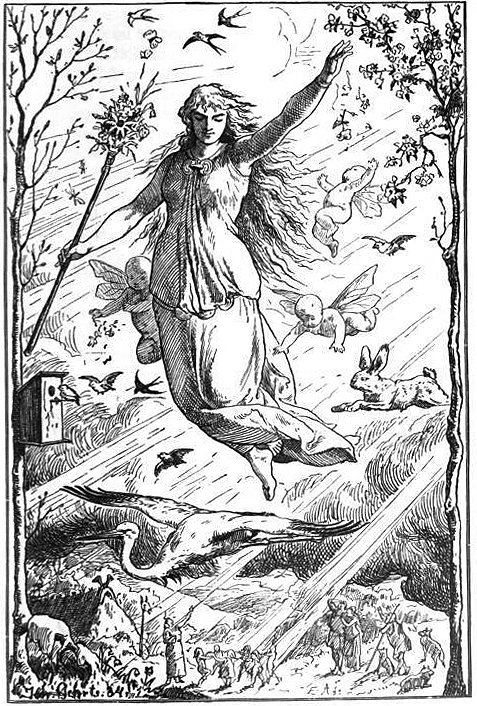
“Ostara” (1901) by Johannes Gehrts
When we think of Ostara we think of Eostre, an Anglo-Saxon Goddess of spring. There is little information on Eostre, though the Venerable Bede makes mention of her in the 8th century text De Temporum Ratione (*see note at end of blog). Eostre then appears in literature again several centuries later, in Deutcsche Mythology, a compendium of oral traditions collected by Jacob Grimm. Grimm describes Eostre as a goddess of the dawn, joy, and blessings, saying that there are springtime festivities connected to her. One such festivity included young maidens dancing in white gowns towards bubbling brooks, where they would wash their hands and faces in the water to preserve their youth and beauty.
Even if Eostre’s threads through literary and archeological records are thin, she is still deserving of attention and tribute at the Spring Equinox. Her stories are relevant to the growth, wonder, and magic of Spring. In Ostara: Customs, Spells and Rituals for the Rites of Spring, Edain McCoy shares a sweet story about Eostre meeting with a rabbit in spring. Even if this is not one from mythological volumes of the days old, it is an adorable story that can be enjoyed by readers of all ages. One of Eostre’s finest devotees was a small hare who wished to give a gift to the goddess but wasn’t sure what he could offer the goddess of spring. One day, while looking for food, he came across a fresh egg. Although he craved the delightful egg for a snack for himself, he decided it would be a wonderful present for Eostre. He painted the egg bright colors and drew symbols and designs on it. When the egg was complete, he offered it to Eostre. Eostre was so delighted by the hare’s egg, that she decided that it would be a tradition that all children would receive eggs at the Spring Equinox.
Eostre can be called upon when you want to return to a simple and innocent frame of mind. She allows you to observe the growing world with wonder and love. She can also be called upon when you are looking for inspiration, want more abundance in your life, or have a project that needs a little extra boost of magical power to grow. Offerings to Eostre include painted eggs, spring flowers, and figurines of bunnies (and yes, I think that includes chocolate bunnies too).
Hretha: The Anglo Saxon Goddess of March
via Unsplash by Mimpic Photography
Returning to the Venerable Bede’s De Temporum Ratione, two Anglo-Saxon spring goddesses were noted for the origin of March and April’s names: Hretha and Eostre. Bede notes on March: “Hrethmonath is named for their goddess Hretha, to whom they sacrificed at this time.” Unfortunately, Bede supplies no further details about Hretha, leaving scholars to speculate on Hretha’s attributes and status amongst early pagan Anglo-Saxons. Scholars and Pagan researchers have tried to build her personality on the etymology of her name. Her name has been etymologically connected to “glory,” “victorious,” and “swift.” And, again returning to Deutcsche Mythology, Folklorist Jakob Grimm suggested that Hretha meant “shining and renownful goddess.” He also believed Hretha was connected to the Roman God Mars.
Modern day Pagans have also developed Hretha’s personality and magic through their spiritual encounters with her. River Devora sees Hretha as a domestic goddess who demonstrates the powerful healing powers of the hearth and home, saying “she also stands on the threshold of that idealized home and can help us to transition into whatever we need when we are out in the world… she can help us put on our armour to deal with the rest of the world.”
I would like to suggest one way to understand Hretha’s personality and magic is through the personality of the month of March. March is one of the most temperamental months, giving us a wild range of unpredictable weather. You could experience snow, sleet, sunny days, warm weather, and wind, all within a March week! In that sense, perhaps Hretha is a goddess of mood changes, a deity we can go to when our emotions feel like a pendulum swaying back and forth. Hretha can support you when your feelings are overwhelming you, helping you to take back control and helping you to look forward to a stable, calmer, and more predictable time. March’s weather has also led me to see Hretha as a goddess of transition and overcoming obstacles. You can ask her for strength and to help guide you to a stable and abundant path.
Hretha also feels like the wild but strong elder sister to Eostre. Hretha arrives in March and transforms its unpredictable nature into a much more comfortable and stable space. Eostre safely arrives in a tamer April to rule over a realm of wildflowers, growth, and fertility. It is as though Hretha paves the way for Eostre to have a much gentler landing in this world. Perhaps then Hretha can be seen as a protectress of those who are younger, just discovering themselves, or starting out in a new (and maybe scary) venture. You can speak to Hretha when you need help finding your footing, want confidence to break out into the world, and receive fierce “been there, done that” wisdom only an elder sister could supply.
If you wish to connect with Hretha, spend time reflecting on the wild temperament of March weather. If you can, take a trip into nature during March. What does it feel like to experience that first warmer sunrise when the birds are brave enough to start singing again? How does it feel when you are drawn back into the homestead to wait out a late season snowstorm? You can also try to follow Hretha on the Anglo-Saxon archeological trail. For those who live in England or can visit England, consider going to sacred places for the Anglo Saxons. You can visit the remains of an Iron Age hillfort called Yeavering Bell in Northumberland National Park, England or the recreated Anglo-Saxon village of West Stow in Suffolk, England. There is also a fantastic Anglo-Saxon exhibit at the British Museum of History that displays the treasures of a burial ship known as Sutton Hoo.
Freyja: Goddess of Love, Magic, and Healed Confidence
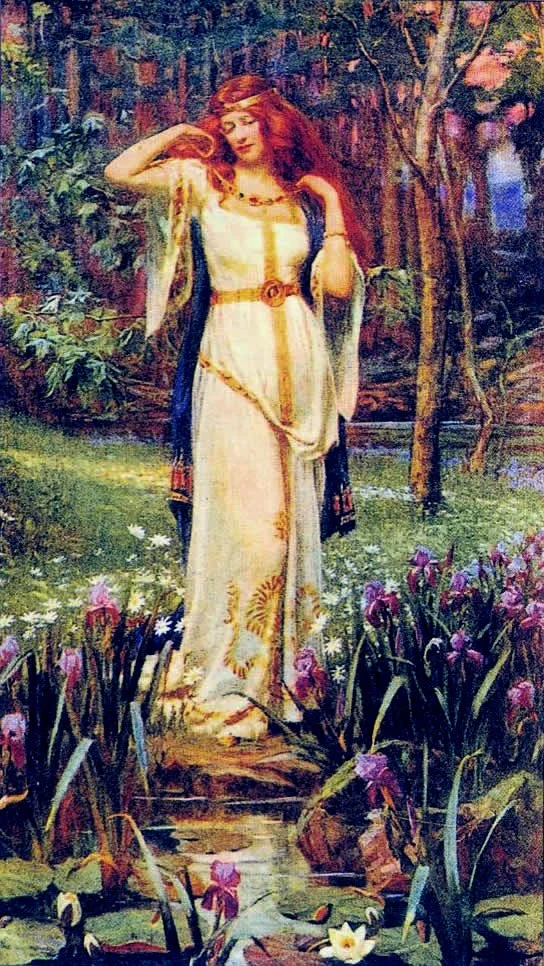
“Freyja and the Necklace” (1890) by James Doyle Penrose
Freyja is a Norse goddess associated with the return of spring, love, fertility, sensuality, and magic. In the Edda, composed by Snorri Sturluson, Freyja is described as a glorious goddess who “is the most approachable one for people to pray to… She was fond of love songs. It is good to pray to her concerning love affairs.”
Freyja isn’t limited to associations of love and fertility: she is a multifaceted goddess. Freyja was said to teach the Aesir a form of magic known as seidr, which involves trances and shamanistic rituals to divine and weave the future. Those who practiced seidr were said to have a powerful ability to access secret knowledge and share wisdom about future events. Not only was Freyja said to be a master at seidr, but she also taught the form of magic to Odin.
Frejya's name means "Lady" and she is also known as "The Vanadis," or "The lady of the Vanir." She is from one of the two divine houses in Norse myth: the house of Vanir. Her brother is Freyr (The Lord), and her father is Njord, a sea king. Her mother is not known, but some speculate it is Nerthus, an earth goddess. Óðr is Freyja's husband, though he seems absent from mythology, said be off on long and frequent travels. It is even said she would weep tears of red gold when he was away from her. Freya wears a cloak made of falcon feathers, which she puts on to fly in the form of a falcon around the world. She rides a boar into battle but also has a chariot led by two cats.
Interestingly, blogger Thorskegga Thorn suggests that deities from the Vanir house may have been neglected by Christian scholars in their recorded tales of Scandinavian myths because sexual promiscuity. Freyja was portrayed as such a sexual goddess, that one myth tells of her spending a special kind of night with the dwarves, who created a beautiful necklace named Brisingamen that she couldn’t resist. When the dwarves showed her the necklace, she asked what the payment for it was. They said payment was to spend an intimate night with each of them. She obliged for her gorgeous piece of jewelry. Freya’s sexuality is also put on display again when Loki insults her in the Poetic Edda, saying “I know all about you; you aren’t lacking in blame: of the Aesir and the elves, who are in here, each one has been your love.” Apparently, slut-shaming is not a just modern occurrence.
It’s clear that Freyja’s character is not so simple: this complex goddess has many different talents, stories, and traits worth examining and honoring. As Barbara Walker points out in The Woman’s Encyclopedia of Myths and Secrets: “She was called the Goddess of fertility, love, the moon, the sea, the earth, the underworld, death, birth; virgin, mother, ancestress, queen of heaven, ruler of fate, of the stars, of magic; the Great Sow wedded to the sacrificial board; the Mistress of Cats; the leader of Valkyries; the Saga or ‘sayer’ who inspired all sacred poetry.”
Freyja must also face dark emotions, specifically the grief she feels from missing her absent husband. Freyja is must somehow rebuild her life and wellbeing, even after dealing with the psychological and emotional ramifications of abandonment and neglect, as well as shame for her sexual awareness. These lessons are unfortunately familiar ones that many living under patriarchy can relate to. Freyja teaches us that there are ways to find pleasure and joy, to savor life’s good moments, and use magic to manifest desires and heighten personal awareness.
Freyja can be called upon if you are trying to bring love into your life. There are many ways to speak with Freyja about bringing love into your life. You can keep a statue of her (or a framed illustration of her) on your altar. Dress your altar with fresh flowers such as roses or daisies. Decorate with golden objects or jewelry that you love. Light red candles and near your altar and write a letter to Freyja, telling her in detail the kind of traits you are looking for in your mate. Explain to her why you need romance in your life and take a moment to describe how it would feel to have that special someone arrive soon. Anoint the letter with amber essential oil and leave it on the altar. Keep the letter with you if you’d like or keep it with Freyja’s image.
Freyja's beauty was known by all. She was the inspiration of love songs and poetry. Ask for Freyja to help you with self-love, confidence, and a sense of self-worth. Laurie Sue Brockway’s A Goddess Is a Girl’s Best Friend offers a wonderful exercise for creating a set of “Freyja’s Runes,” that are a set of stones with sensual adjectives on them. As a spin on this idea, get a set of index cards (a dozen to three dozen). On each index card write a word that will inspire you to feel beautiful, empowered, and confident. For example: intriguing, mysterious, successful, prosperous, beautiful, magnetic, confident, desirous, etc. You can decorate the cards if you are crafty. Every morning pull a card for focus that day. Keep the card with you, and look at it frequently, knowing that you are what is stated on the card (and more).
Freyja would go to battles and take half of the fallen soldiers to live forever in her hall. I have always found Freyja to be brilliant, kind, and warm during times of transition. Ask her to help you find the good during difficult times. Ask her to be beside you while you weep. Ask her to reveal joy and love in your life or make it clearer so you have an optimistic path to follow. Freyja wears many magical hats: she can help you discover love and beauty, but she will also walk onto a battlefield if it means there is an opportunity for justice and empowerment. She can be a flirt, but she also is willing to engage in an enlightened discussion about magic. She celebrates the birth of new life, new relationships, new endeavors, but she also offers comfort and magic to those who find themselves in moments of transition. Let her many interests encourage you to explore what you love.
Blodeuwedd: Independent Goddess of the Land and Otherworld
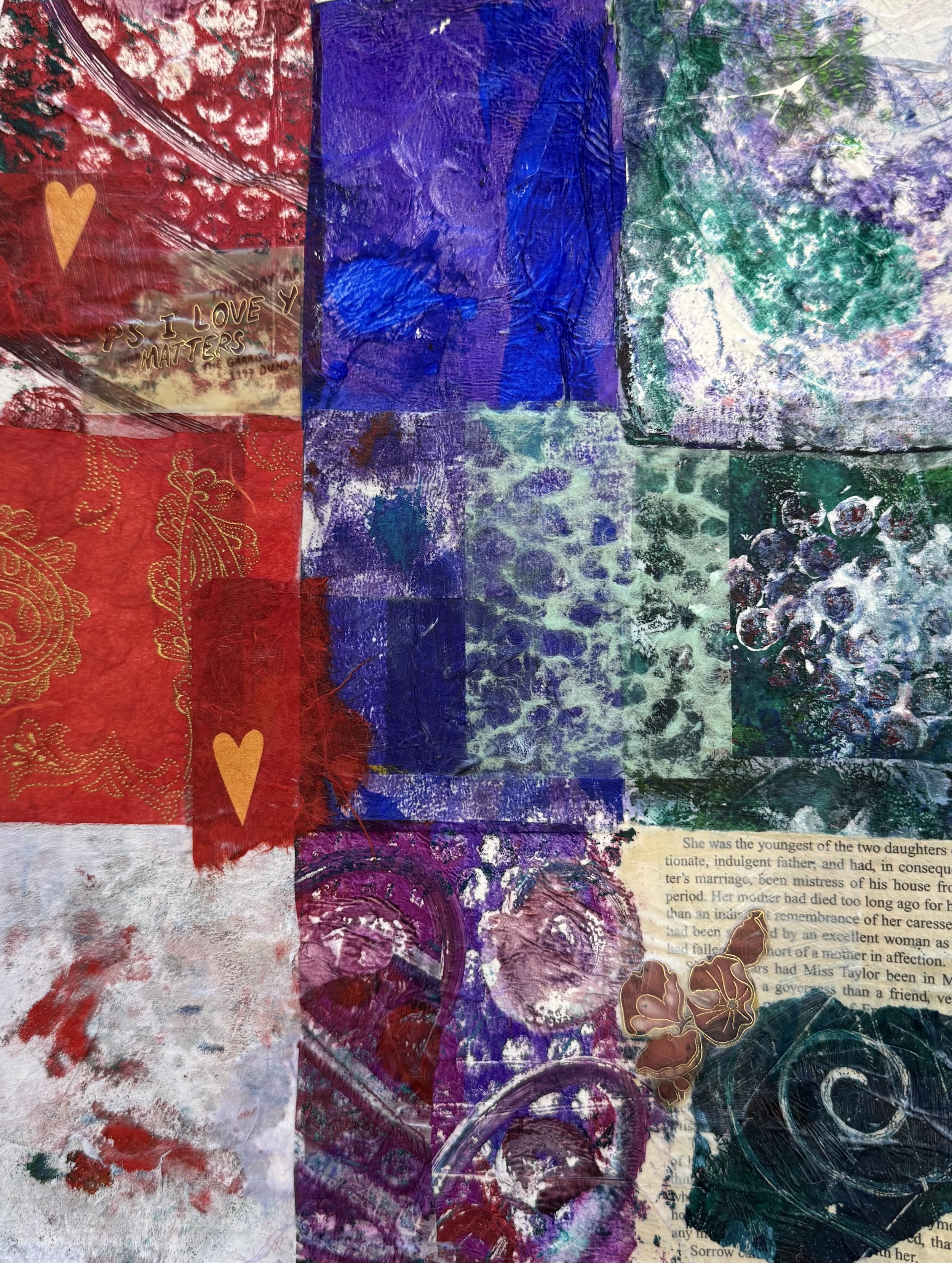
via Unsplash by Milan Popovic
Blodeuwedd is a Welsh goddess of flowers and fertility, often associated with the celebrations of Ostara and Beltane. Blodeuwedd’s story appears in the tale of “Math, the Son of Mathonwy,” a story in the medieval Welsh book The Mabinogion. The story begins with the goddess Arianrhod shaming her son, Lleu Llaw Gyffes, saying that he could not be king unless she permitted it. Through her rule, she made it so he could not marry a mortal woman, thus stopping him from gaining the throne. However, Lleu has magical abilities that allow him to be safe from being killed, unless in the most complex of circumstances. As we learn: Lleu cannot be killed in a house or outside; on a horse or standing on the ground. This at least allows Lleu the time to search out a wife who is not human. Lleu’s magical cousins Math and Gwydion can help him with this task. They create an otherworldly woman by using the flowers of oak, broom, and meadowsweet. By doing this magic, they created a beautiful maiden of the land they named Blodeuwedd, meaning “Flower-faces.” Lleu and Blodeuwedd are married, and Lleu is finally able to take the throne, through marrying a woman of the land and not a human.
While Lleu is away hunting, a hunter named Gronw comes to the castle. When seeing Blodeuwedd, the two instantly fall in love. To be together, they plot a way to kill Lleu. When Lleu returns, Blodeuwedd tells him that she is afraid he could get killed. This, of course, is feigned and part of the plot to set up Lleu’s death. Though Lleu tries to coax Blodeuwedd, she insists that he set up the circumstances in which he could be killed. So, they set up a bath on a riverbank with a thatched roof. They bring one goat to the bank of the water. Lleu puts one foot on the goat and the other foot on the side of the bathtub. In this instant, Gronw throws a spear and hits Lleu in his side. Lleu turns into an eagle and flies away.
Gwydion finds Lleu as a wounded eagle high in a tree, and by chanting, gets him to fly down. With the help of a magical wand, Gwydion turns Lleu back into his human form. Gwydion then sets out to find Blodeuwedd and turns her into an owl, banishing her from seeing the light ever again. When Lleu is completely healed, he slays Gronw.
For me, the story of Blodeuwedd is tragic and beautiful: she has an otherworldly creation, made with magic from flowers, with the intention of wedding a human hero. Unfortunately, her curiosity for feeling love and her passionate desires condemn her back to nature. As Winter Cymraes reflects in her article about Blodeuwedd, “She is never asked whether she loves him or desires to marry him. She was created for his purposes, solely to assure his right to rule the land. Her own desires are impossible to achieve while Lleu lives and she is often seen as the epitome of non-assertive femininity, fickleness, and the faithless wife, using the passion of two men for her to seal the doom of both.”
I see this as an allegory of what many individuals encounter when trying to find themselves, their positions in society, and their roles in relationships. Sometimes it feels as though it is hard to be heard, that her words are lost through an otherworldly barrier, her needs met only with sacrifice. You can connect with Blodeuwedd when you wish to explore the liminal and Otherworldly magic of spring as nature transforms into a blossom-filled landscape. Blodeuwedd can also help you learn about personal boundaries and powerful independence. She is also there to help you explore your true feelings and needs. You can honor Blodeuwedd by decorating your altar with oak, meadowsweet, and broom. You can feel her magic when you visit flower gardens or support an animal sanctuary that specializes in the rehabilitation of owls.
Persephone: Goddess of Transformation and Self-Reclamation
“The Return of Persephone” (1891) by Frederic Leighton
Persephone is the gentle and beautiful Greek goddess of the dead and afterlife. She is the daughter of Demeter and Zeus and was abducted by Hades, Lord of the Underworld.
The story goes that Hades was deeply attracted to Persephone. He asked Demeter for her blessing to wed Persephone, but Demeter refused to give the blessing. On a beautiful spring day Persephone was gathering flowers when she was particularly drawn to a narcissus flower that happened to be further away from the patch of other flowers. When admiring the narcissus Hades abducted Persephone and took her to the Underworld where she was forced to be his queen.
Demeter mournfully searched for Persephone, and as she continued to search, the earth began to decay and die. The world continued to grow cold and icy, the land barren as Demeter was in deep grief over the loss of her daughter. Seeing this, Zeus sent Hermes to the underworld to fetch Persephone, on the one condition that Persephone could return to Earth if she did not eat anything while in the underworld. Hades then pressed one single pomegranate seed into Persephone’s mouth, condemning her to the underworld for half the year. Thus, Persephone spends part of the year in the underworld with Hades, and during this time Demeter mourns and the earth is bare and cold. But when Persephone returns, so does the warmth and growth of nature.
This tragic tale of Persephone’s innocence lost has an empowering lesson embedded within it. While in the Underworld, Hecate became Persephone’s attendant. Persephone then has access to this powerful magical crone’s wisdom. As Kala Trobe observes in Invoke the Goddess: “The magic she learns in Hades is of transcendence – she realizes that spiritual strength comes from a source independent of external stimuli and physical manifestations.” Persephone reclaims her personal power through magic, wisdom, and facing the darkness of the Underworld as well as her relationship with a wiser, older goddess who supports her in her maturation.
Persephone can be called upon when you are in a transitory phase. She can help awaken confidence, make you become more self-aware, and encourage personal growth. She can help heal those who have fallen victim to the similar atrocities that Hades felt entitled to enact. In other words: Persephone will guide you through the darker aspects of healing and shadow work, guiding you a place where you can reclaim your body, boundaries, time, and joy. Appropriate offerings to Persephone include fresh flowers, figs, grapes, pomegranate, honey, olive oil, and wine.
Whichever goddesses you which to approach this spring, be prepared for deeply reflective work. While this work can bring you to the shadows of trauma recovery, they can also help you blossom into an independent, contented, and magical person.
*Note from Eostre Entry: It is important to note that Bede’s knowledge and authority on Anglo-Saxon faith prior to Christianity to questioned. This is important to keep in mind as there are dozens of online resources claiming that Eostre was confirmed and worshipped Goddess or that Eostre’s name inspired the name Easter – both of which are disputable. There are also false claims online connecting Ostara to Babylonian worship of Ishtar or suggesting that the hare was an animal ally to Eostre – both claims do not have any supportive evidence, likely being romanticized modern interpretations. If this is a rabbit hole (pun intended) you wish to go down my recommendation is to start with the article “The Goddess Eostre Bede’s Text and Contemporary Pagan Tradition(s)” by Carole Cusak in The Pomegranate.
The Magic and Mythology of the Egg
One of the most prominent symbols of the Spring Equinox and Ostara is the egg. As the source of life for living creatures, eggs represent birth, rebirth, the soul, and fertility. The egg has played its role in many myths and magic, spanning many cultures over time. It is seen as an enchanting vessel of life, abundance, and infinite possibilities. In this blog we will examine the mystifying and magical qualities contained in the egg as interpreted through mythology, as well as explore ways to enjoy this magic at Ostara, or year-round if so pleased to.
The Orphic Egg, from A new system, or, An analysis of ancient mythology by Jacob Bryant
The Cosmic Egg
The notion of infinite potential is contemplated in the idea of the “Cosmic Egg.” The cosmic egg represents the place from where the universe is created. Myths which span many ancient cultures describe the very beginnings of the universe coming forth from an egg. It is as though the universe bursts out of the egg, dividing into different aspects that make the universe, comparable perhaps even to the Big Bang Theory.
The ancient Babylonian goddess Astarte was said to emerge from an egg. The story goes that the egg was in the Euphrates river, where it was pushed to shore by fish. Once on the shores doves rested on it, incubating the egg until Astarte was born from within it.
In Hindu myth, a seed appears in the primordial waters. This seed transforms into a brilliant, golden egg. The god Braham meditates for one year within the egg, then breaks forth from the egg to create the sky and the earth. In addition to the creation myth, the Lingam Stone from the Narmada River in India is a valuable stone which is shaped like the Cosmic Egg.
In a Chinese creation myth from the 3rd century C.E., Pan-Ku slept within an egg for 18,000 years. He grew into a giant, and when he hatched from the shell the white of the egg (Yin) rose upwards to become the sky and the yolk of the egg (Yang) descended downwards to become the earth. Pan-Ku spent the next 18,000 years pushing the two elements apart from each other to keep them from blending. When the sky and earth were finally separate, Pan-Ku laid down and died. The world grew from his corpse.
In the Egyptian city of Khemnu (Greek word is Hermopolis), the Ogdoad were a group of four couples, eight deities in total, who were worshipped. The Ogdoad, who were often depicted as frogs or serpents, representing primordial waters, eternity, darkness, and air. One myth says that the Ogdoad created a giant Cosmic Egg which birthed the sun god Ra. Other versions say the egg was laid by an ibis, a bird sacred to Thoth. There is also legend that the very shell of this Cosmic Egg is buried within a temple at Hermopolis.
The Pelasgians, settlers in Greece who predated the Hellenistic Greeks, also had a creation myth involving the Cosmic Egg. They believed that in the beginning there was only chaos. From the chaos the Goddess Eurynome rose. She created the sky and sea, and from the sea she danced. She spun around, creating a whirlwind. She rubbed the wind between her hands and created the serpent Ophion, with whom she mated. Eurynome turned herself into a dove and laid the Cosmic Egg. The three beings created a sacred trinity: Eurynome representing femininity, Ophion representing masculinity, and the egg representing the love child. Ophion wrapped himself around the egg seven times to incubate it. When the egg hatched the universe was birthed.
Also valuable to the Greeks was the Omphalos, a conical stone that was worshipped as sacred. Omphalos means “navel,” and these stones are often called “Earth Navels.” In Delphi it was believed the Omphalos was the stone accidentally swallowed by Chronos. In Delos, there is an omphalos which has a serpent wrapped around it, clearly linking the stone’s shape and the Cosmic Egg (the serpent representing Ophion). These stones are not only found in Greece, but in other areas of the world, as well. One such stone is the Lia Fail, which is found on the Irish Hill of Tara, considered to be the birthplace of Samhain. Some theorize that the egg-like stones connect across the world to create a sacred grid system.
Photo Credit: Bee Felten Leidel via Unsplash
Eggs as Talismans
Roman philosopher, naturalist, author, and explorer Pliny the Elder spent time observing the traditions of Druids in Gaul. In his works he described seeing a Druid’s amulet which was called an anguium. It was described as being egg-shaped, having been created by the form of serpents wound tightly together. The Druid’s Egg was said to have magical powers: it aided people in legal matters, helped draw attention from royalty, and had healing powers. Egg-shaped shaped crystals and glass have been discovered, leading some to believe these were the Druid’s egg amulets. Interestingly enough, the serpent and the egg come together in the Gaulic Goddess Sirona, a fertility goddess of healing and rebirth. Sirona was depicted carrying a bowl of three eggs. She had serpents coiled around her arms, reaching towards the bowl of eggs.
Pysanky are the ornately decorated eggs with a long, even ancient, tradition in the Ukraine. They are raw eggs, not to be eaten, but to be gifted and used as talismans. They are given to friends and family for good health and prosperity. They are fed to animals to give them good luck in producing many healthy babies. They are saved in homes or buried under homes for protection against fire and storms. They are buried in fields to bring good fortune to the year’s crop. The fascinating aspect to the pysanky are that their decorations are full of magickal and ancient symbols: trees, flowers, spirals, and birds depict images steeped in mythology and magic commonly associated with springtime.
Photo Credit: Ella Christenson via Unsplash
Egg Magic
Working with eggs in magical work can be quite fulfilling. They can be used in spells for good fortune, fertility, love, creativity, alchemy, transformation, and protection.
Egg painting magic in the home. Consider making the practice of egg decorating a magical one. Consider a goal you wish to achieve within the coming season of growth. Ask yourself where you wish to see abundance in your life. Magically decorate the eggs in a manner to reflect your wishes for abundance by using magical symbols and colors. For example, paint an egg red or pink and decorate with hearts to reflect wishes for love. Paint an egg green and adorn with gold glitter to reflect wishes for money. Paint an egg purple and glue violets on it for intuition and spiritual growth.
Cascarones. Cascarones are hollowed out eggs that have been filled with items like glitter, flour, or perfumed herbs. Traditionally, they would be playfully broken on a person’s head. If you are talented and patient, empty an egg and refill it with herbs and oils that correspond with something you wish to grow in your life. Break it at the time you really want to see that wish manifest itself.
Powdered Egg Shells. Powdered egg shells, also known as cascarilla, are used in Santeria, folk, and hoodoo magic. Cascarilla can be sprinkled around the borders of rooms for protection and peace. Because it creates a chalk-like substance, it has also been used to draw sigils and magical symbols. It can be added to floor rinses for protection in the home. To make cascarilla, clean and rinse egg shells thoroughly. Bake the shells at a low temperature in the oven (I recommend starting at 250 degrees F) for about 15 minutes. Grind them to a very fine powder with a mortar and pestle.
Egg magic in the garden. If you are talented and patient, hollow out eggs and make ornaments out of them with ribbon. Or, use plastic eggs as an easier substitute. Hang the eggs from tree and shrub branches in your yard or garden for abundance and good luck. To bring growth to your garden, paint an egg brown and green and mark it with symbols of growth and fertility. Plant it in your garden, and walk clockwise around the garden, saying “Egg of the Goddess, giver of all things, grow my garden abundant this spring. Strong and sacred this place must be, springing forth its bounty, so blessed be.”
Magickal Egg Hunt. Here’s an opportunity for children of all ages to enjoy Ostara egg hunts. Fill plastic gift eggs with small magical amulets, charms, crystals, bags of seeds, herbs, small vials of oil, jewelry, or incense. With it, include a small fortune or inspirational quote. The people involved in the egg hunt will find the egg that offers the most valuable fortune and gift they need for springtime.
White Light Bubble as a Protective Eggshell. For many people in the metaphysical world, the idea of the “White Light Bubble” describes a visualization exercise of seeing white light surrounding the body for protective energy. For the purposes of Ostara, consider morphing the white light bubble into an egg shell. Take a moment to quietly pause. Close your eyes and take long, deep breaths. Visualize yourself surrounded by a warm, comforting, and protective eggshell. See the infinite oval shape of the shell surrounding you, knowing that nothing negative or harmful can penetrate your personal space. Consider yourself at the very center of the Cosmic Egg. What are the properties necessary in this centered place to create life and the universe? When it is time to emerge from the egg, take a moment to see how it feels to be “born.” What sensations do you feel? What do you see? What are the immediate priorities you want to tackle? Contemplate how this exercise feels similar or different to the white light bubble.
Eggs on Ostara Altars. The altar is a perfect place to display the egg. Whether embellished with magical symbols or left natural, their presence on an Ostara altar reflect the rebirthing of nature in the spring. In addition to actual eggs, put on display objects such as lingam stones, faberge eggs, egg-shaped crystals, or egg-shaped chocolate. Take time to gaze at the egg and consider what the egg symbolizes for you.
Eggshell Seedlings
If you are more interested in a gift that you can share with your green-thumbed friends, consider creating eggshell seedlings. Take an eggshell that has been broken closer to one end (approximately one third down from the top) and gently rinse it out. Return it to an egg carton and allow it to dry. Poke a hole into the bottom of the shell. Add a scoopful of potting soil into the eggshell. Place seeds into the soil as directed on the seed packages. When the seeds have sprouted simply transplant the egg directly into the soil outdoors.
Photo Credit: Kelly Neil via Unsplash
Divining with Eggs
Egg divination has long been practiced, and at times in history it was a popular form of divination. While some methods are easier than others, and some are neater than others, they are all fun to experiment with during the season of Ostara. Please note that I have also found that various names are used for various methods of divination with eggs - you may wish to speak with an egg diviner to see if their terminology varies from the list below.
Oomancy: Oomancy is divining with the egg white. Bring a pot of water to boil, and then lower the heat slightly. Break an egg and separate the white from the yolk. Pour the egg white into the boiling water and interpret the shapes made from the egg whites. When divining the shapes, consider your immediate reaction to what you see.
Oomantia: Oomantia is the divining of the egg shell. An excellent egg divination described by Nancy Vedder-Shults in her article “Egg Divination” suggests to hard boil an egg. Draw different symbols on the egg, giving meaning and interpretation to each of the symbols. Hold the egg and think of your question, and then gently roll the egg. When it stops rolling, your answer is in the symbol facing upwards. Another method for reading eggshells include cracking a hardboiled egg and interpreting the shapes and lines made with the cracks in the shell.
Ooscopy: Ooscopy is the divination of reading the egg itself. A fun, yet messy form of egg divination that involves reading the shell, white, and yolk. Hold an egg for a moment and concentrate on a question you have. Throw the egg onto the ground, or perhaps in a dish. Interpret the shapes of the shells and egg to come to a divine answer.
Egg Superstitions and Old Traditions: There is an old tradition that says you will have a lousy day if you crack an egg at breakfast and break the yolk. Cracking an egg with a double yolk is usually a good sign, often signifying a pregnancy or happy union, unless you are British, in which case a double yolk is a sign of death or ill fortune. An old Scottish divination said to fill your mouth with the white of an egg, not swallowing a drop. You are then to go out and about in the world until you hear the name of a man or woman. This is the name of the person you will marry.
Reverence for the Egg
Humanity has long revered the egg as a symbol of birth and creation, but also as a magical object that could be used for fortune and protection. Ostara is an excellent time to contemplate how such a fragile object could contain all the makings of our universe. Perhaps it is worth considering how vulnerable the egg is: with love, care, and devotion, life can spring forth from it. The mystical and soulful egg reveals the very same needs and nature of humanity.
To review references for this article please visit my Works Cited Page.
The Spring Equinox and Ostara Menu: Recipes and Food Ideas to Celebrate Beginnings, Abundance, and Nature’s Growth
The Spring Equinox is a celebration of growth, beginnings, fertility, potential, and opportunities. We are finally stretching out of hibernation and celebrating the warming temperatures and balance of light and dark. Birds begin to wake us up with their songs and early flowers like phlox, daffodils, and violets bring dashes of color to the landscape. After a long winter of working through pantry foods and heavier dishes, spring brings us a welcoming shift to lighter and greener spring vegetables. The wonderful egg is on display, giving us nourishment and reminding us that the wheel of the year has returned to a time that honors fertility and rebirth.
Some of the staples of Spring Equinox meals include early spring greens, eggs, ham, and fish. If you love to get some healthy vegetables in your diet, the Spring Equinox is for you. Kale, spinach, arugula, kale, broccoli, spring onions, radishes, and artichokes are among some of the earlier spring crops that are utilized in Spring Equinox meals. In terms of fruits, citrus fruits such as lemons and oranges add a bright pop of flavor to dishes. Herbs that flavor meals during early Spring include cilantro, dill, parsley, mint, and thyme. Eggs are an obvious choice to indulge in at this time of year, being an essential symbol of fertility and sustenance. When considering what to prepare this time of year, think about what is in season in your area: see what produce local farmers have available during this time and if you have any greens sprouting in your own garden. Have fun with making bright green dishes, and don’t forget to enjoy a sweet treat for dessert!
Main Courses
Ham, fish, and chicken reign supreme for Spring Equinox main courses. Lemon flavored chicken or fish would make a great main dish. If you prefer a vegetarian or vegan diet you don’t have to worry about feeling left out either: stuffed mushrooms or green pasta dishes are options for folks who don’t eat meat.
Blackened Fish Sandwiches with Horseradish Tartar Sauce
Carrot and Spring Onion Toad in the Hole
Cheese & Spinach Stuffed Portobello Mushrooms
Corned Beef and Cabbage Slow Cooker Recipe
Creamy Baked Eggs with Leeks and Spinach
Crustless Asparagus, Leek & Feta Quiche
One Pot Lemon Chicken and Orzo
Orecchiete with Sausage and Spinach
Pasta with Cauliflower, White Beans, and Kale
Spinach and Ricotta Gnocchi with a Lemon Oil Drizzle
Spring Brunch Crepes with Hollandaise Sauce
Spring Green Minestrone with Tortellini
Sweet Pea Gnocchi with Tarragon Pea Cream
Spring Ramp Pasta with Morels and Peas
Spring Risotto with Asparagus and Peas
Spring Salmon with Creamed Leeks, Potatoes, and Asparagus
The Brussels Sprout Special (Cauliflower Pizza)
White Pizza with Mushrooms and Arugula Garnish
Soups, Stews, and Chilis
Soups that showcase vegetables are a spotlight for the Spring Equinox. However, if it is still cool at night, there are plenty of suggested soups with ham, cream, and potatoes below to warm your belly.
Acquacotta (Wild Greens and Bread Soup)
Avgolemono Soup (Greek Lemon Chicken Soup)
Beautiful Soup (Vegetable Soup with Beets, Dill, and Orange Zest)
Broccoli and Lemon Soup with Quinoa & Feta
Spring Minestrone with Chicken Meatballs
Salads
Take advantage of spring vegetables when cooking for the Spring Equinox. A huge salad with leafy greens, bean sprouts, radishes, carrots, green onions, edible flowers, seeds, and a lemon vinaigrette would be a fantastic dish during the spring season. Since this time of year is all about growth and planting seeds, consider sprinkling seeds and sprouted greens onto your salads.
Arugula Salad with Lemon Vinaigrette
Asparagus and Spring Onion Salad with Seven-Minute Eggs
Avocado, Grapefruit and Fennel Salad
Lemon Herb Pasta Salad with Marinated Chickpeas
Simple Spring Salad with Crunchy Seeded Dressing
Spring Mix Salad with Herbed Goat Cheese
Spring Pea Salad with Mint Vinaigrette
Vegan Pasta Salad with Herbs, Peas, and Pumpkin Seeds
Breads
One of the most traditional breads associated with Spring, though especially the Easter season, are Hot Cross Buns. You may also want to look to the seasonal fruits for bread inspirations as well as the traditional Irish Soda Bread for St. Patrick’s Day.
Cheesy Scallion Pull-Apart Rolls
Side Dishes
Sides that feature our spring greens and eggs work well for Spring Equinox celebrations. Consider adding in flavors of the forest, that is, foods that are foraged in nature early in the spring. While you shouldn’t trust mushrooms found in the wild, your local mushroom farmers will likely have morel, porcini, wood ear, oyster mushrooms, and hen-of-the-woods mushrooms in stock in spring. Many edible flowers and herbs make their appearances early in the spring as well, such as chickweed, dandelion, violet, nasturtiums, lilac, lavender, mint, lemon balm, and purple deadnettle. Again: do not attempt to gather your own flowers and mushrooms in your backyard without professional guidance.
Best Creamed Spinach with Cream Cheese: A Recipe for Love & Wealth
Garlic Butter Oyster Mushrooms
Goat Cheese with Edible Flowers and Arugula
Mixed Spring Mushrooms with Garlic Butter and Pine Nuts
Orange-Glazed Carrots with Ramp Barley and Spinach
Spring Vegetable Jumble with Lemon-Tarragon Butter
Steamed Artichokes with Garlic Aioli
World’s Best Spinach Artichoke Dip
Desserts
Desserts include favorites like custard, rice pudding, chocolates, and citrus tarts. As mentioned in the “Side Dishes” section, desserts that call for edible flowers would be an excellent match for Spring Equinox feasts. Lemon is especially favored at the Spring Equinox, as are imported tropical delights like kiwi, pineapple, oranges, and bananas. In some areas Rhubarb is starting to become available as well (though I equate this more with Beltane to enjoy with strawberries).
Almond Fairy Cakes with Candied Borage Flowers
Easter Cupcakes with Coconut and Chocolate
Easter Egg Peanut Butter Candies
Lemon and Lavender Ostara Cake
Lemon Layer Cake with Lemon Cream Cheese Buttercream
Yogurt Sheet Cake with Fruit and Edible Flowers
Beverages
Our first impulse in March may be is raise glass of green beer to the Spring; and while this is certainly a fantastic idea, there are plenty of drinks that celebrate the spirit of Spring. Consider lavender, mint, honey, and lemon as great springboards (pun intended) for your beverages.
Garden Collins (Tom Collins Mocktail)
Green Beer Five Different Ways
Lucky Shamrock Shake with Bailey’s Irish Cream
Rosemary, Lemon Balm & Sage Mulsum (w/ just a touch of Lavender)
Vitamin Parade Mocktail with Carrot, Pineapple, and Egg White
The Spring Equinox and Ostara Magic: Correspondences to Celebrate the Return of Life
The Spring Equinox celebrates rebirth, balance, and the return of life. Nature begins to bloom at the Spring Equinox: green is reappearing in nature, birds are singing in the morning again, spring flowers blossom, and trees begin budding. The ground thaws out with the warming weather and early crops start to appear, while garden beds are prepared for a season of growth and cultivation.
Wiccans who observe the Wheel of the Year revere the Spring Equinox as the celebration of Ostara. Ostara’s namesake comes from Eostre, an Anglo-Saxon goddess of the spring. Unfortunately, there is very little information on Eostre, though the Venerable Bede makes mention of her in the 8th century, saying Easter was named after her. Furthermore, it is important to keep in mind that the name Ostara is a modern Pagan creation, one which Aiden Kelly adopted for the Spring Equinox in the 1970s. As writer Jason Mankey explains, “There aren’t any tales of Eostre throwing eggs to all of the good little Germanic pagans, or her riding a giant rabbit, so it’s hard to say with certainty that she existed and is the source for the word ‘Easter.’” So, while Ostara is a modern interpretation of ancient celebrations, it is still a valuable seasonal marker that indicates the awakening of life and invites us to perform fertility, manifestation, and rebirth magic.
At the Winter Solstice we learned to hold onto the hopeful promise that the light would return, and the sun would go strong again: at the Spring Equinox this promise is fulfilled. The Spring Equinox must have been a time of anticipation in ancient civilizations: at the dawn of spring the cold spell of winter was broken. After months of uncomfortable weather, there must have been a feeling of relief to be able stretch out of hibernation, go outdoors, and even add greens back into the diet after depleting food stocks. There must have also been an inspiring feeling to witness the sun lingering in the sky longer, motivating people prepare gardens and plan for the commencement of the year’s growing seasons. Today we may not be so connected with the land or the cycles of growing seasons. Strawberries are available all winter at the local grocery store and heat is not a scarcity if you keep up on the electric or gas bill. Consider how much more precious the return of warm weather would be during a time without modern conveniences!
For witches and Pagans, the symbolic value of Spring’s return asks us to consider what seeds we wish to plant in our metaphorical gardens. We can consider what projects and goals we wish to initiate and grow over time, and even work our magic into these goals to encourage the manifestation of good things. The Spring Equinox season also invites you to reconnect with nature: take time to go on a nature hike and explore the spring wildflowers or spend time in your garden. You may find that edible flowers decorate your salads and early-spring herbs are collected and dried for magical workings throughout the year. Depending on where you live, Spring can herald in showers and severe weather: these weather events invite you to deepen your appreciation for all aspects of nature, both calm and wild, as there needs to be a balance of both sunshine and rain to grow an abundant garden. The metaphor in this is useful, even for modern Pagans, who may not rely solar calendars for their livelihood as their ancestors did.
Correspondences for Magic and Celebrations at the Spring Equinox
Names: Ostara, Spring Equinox, Vernal Equinox
Date of Celebration: Celebrated on the Spring Equinox (which usually falls between March 19th and March 23rd in the Northern Hemisphere and between September 19th and September 23rd in the Southern Hemisphere).
Deities Honored:
Bloduwedd
Cernunnos
Dagda
Eostre
Freya
Hrethra
Mithris
Persephone
Sita
Springtime Animal Allies:
Bears
Bees
Chicks and Chickens
Chipmunks
Deer
Fox
Frogs
Groundhogs
Hedgehogs
Lambs
Rabbits and Bunnies
Skunks
Squirrels
Magical Focuses:
Awakening from slumber
Balance
Communication
Fertility
Growth
Inspiration
Love
Manifestation
Motivation
New beginnings
Potential
Purification
Rebirth
Suggested Activities:
Begin a new project
Create a vision board of goals you wish to grow in the next few months
Decorate eggs and/or do magic with eggs
Do yoga poses that promote balance (such as the Tree Pose)
Gift egg and chocolate baskets to friends
Go bird watching
Go for a hike
Have a tea party in a garden
Host or participate in an egg hunt
Practice spring cleaning and purification magic in your home: remove clutter, donate unused items, open windows to let fresh air in, and clean your altar with Florida Water
Watch the sun rise
Work in your garden
Altar Decorations:
A jar of collected rain water from spring showers
A “Pot of Gold” (a bowl or cauldron full of coins and pyrite)
Animal figurines (such as chicks, rabbits, or robins)
Decorated or painted eggs
Easter-themed candy like Chocolate Bunnies, Peeps, or Cadbury Eggs
Found four-leaf clovers
Seedlings in a small planted pot
Spring flowers such as daffodils, lilacs, and/or tulips
Food and Beverages:
Apricot
Artichoke
Arugula
Asparagus
Avocado
Bean Sprouts
Beets
Broccoli
Carrots
Cabbage
Cauliflower
Chicken
Chocolate and Sweets
Eggs
Fish
Green Onions
Ham
Honey
Horseradish
Hot Cross Buns
Kale
Lamb
Leeks
Lemon
Maple Syrup
Mushrooms
Oranges
Radishes
Seeds
Spinach
Plants, Herbs, Flowers, and Incense:
Broom
Chickweed
Chives
Cilantro
Cinquefoil
Clovers
Crocus
Daffodils
Dandelion
Dill
Gardenia
Geranium
Honeysuckle
Hyacinth
Jasmine
Lemon Balm
Lemongrass
Lilac
Lily of the Valley
Mint
Narcissus
Parsley
Phlox
Thyme
Tulip
Vervain
Violet
Crystals:
Amethyst
Aquamarine
Aventurine
Chrysoprase
Fluorite
Jade
Moss Agate
Pyrite
Rainbow Moonstone
Rose Quartz
Colors:
Light Green
Pastels
Pink
Spring Green
The Imbolc and Midwinter Menu: Recipes to Celebrate Comfort, Warmth, and Hope
Imbolc is commonly celebrated on February 1st (or August 1st in the Southern Hemisphere), and is a turning point in the Wheel of the Year, marking both a powerful shift in nature and an opportunity to honor the creative self. While the Winter Solstice has more communal and family-centered qualities, Imbolc takes on an energy of inspiration which celebrates the quiet inward journey to finding comfort and ease while at awaiting signs of spring. Imbolc lands when we are in one of the coldest cycles of weather – traditionally when the pantry has thinned out and we start to anticipate gardening weather around the corner.
Imbolc’s dishes offer comfort, warmth, and hope, even as the holiday arrives in the coldest and harshest time of the year. Dairy is celebrated in honor of Imbolc’s namesake, which means “In the Belly” in Celtic, a nod to pregnant farm animals beginning to lactate at this time of the year. In addition to dairy foods, staple “pantry items” like dried fruit, nuts, and canned goods, root vegetables, and warming spices are excellent to cook and bake with on Imbolc. If you work with Brigid consider including blackberries in your meals at Imbolc. And, if you are eager about approaching spring weather and maintaining good health, consider working with bright citrus flavors and the earliest spring greens like broccoli and kale. If you are a kitchen witch, use Imbolc as an opportunity to be creative with what you already have on hand in your pantry and freezer.
When I think of Imbolc, I think of the late January 2016 snowstorm in Nashville, where our lovely town received 8 inches of snow, shutting down the city. In the midst of the beautiful snowfall, I found myself with a wonderful break from the daily grind. I turned my attention to resting, reading, writing, and cooking. I enjoyed cooking and baking a number of comfort dishes, some of which are listed below. Is there something you like to cook or bake at Imbolc? Let me know and I will add it to this list!
From Unsplash by Alisa Anton
Main Courses
Imbolc’s main courses are comforting and filling – they bring you a feeling of warmth and satisfaction that is so welcoming in the cold of midwinter. If you eat meat consider working with fish, pork and lamb; for vegetarians and vegans baked tofu and rich pasta dishes work well for mains.
· Butternut Squash Sandwich with Cheddar Cheese and Pickled Red Onion
· Creamy Baked Pasta with Gruyere and Prosciutto
· Creamy Chickpea Pasta with Spinach and Rosemary
· Creamy Skillet Tortellini with Sweet Potato and Spinach
· Grilled Cheese and Tomato Soup Bake
· Maple Mustard Baked Salmon (Low FODMAP)
· Pantry Pasta with Vegan Cream Sauce
· Roast Fish with Cannellini Beans and Green Olives
· Spicy Baked Pasta with Cheddar and Broccoli Rabe
· Vegan Flaky Fish and Chips (Shallow-Fried)
· Vegetarian Enchiladas with Butternut Squash and Black Beans
· Veggie Mac and Cheese (Vegan)
Soups, Stews, and Chilis
Creamy soups, hearty stews, and spicy chilis that inspire healing and warmth for the body and soul are a wonderful thing to serve on Imbolc.
· Creamy Roasted Garlic Potato Soup with Crispy Brussels and Chili Oil
· Creamy Thai Carrot Sweet Potato Soup
· Garlic Sage Cure-All Soup from Provence
· Green Goddess Immune Boosting Soup
· Healing Carrot Soup with Turmeric and Ginger
· Lentil Soup with Sweet Potatoes and Spinach
· Roasted Red Pepper, Tomato and Lentil Soup
· Roasted Sunchoke Soup with Caramelized Shallots
· Winter Vegetable Dungeness Crab Chowder
Salads
Salads that invigorate health and highlight root vegetables, citrus fruits, and nuts are enjoyed at Imbolc.
· Citrus Fennel and Avocado Salad
· Curried Chicken and Peach Salad
· Kale and Persimmon Salad with Pecan Vinaigrette
· Miso Ginger Dressing on an Avocado Salad
· Radicchio, Cara Cara and Quinoa Salad
· Roasted Beet, Ruby Red Grapefruit, and Warm Honey Salad
· Vegan Caesar Salad with Chicories and Walnuts
· Warm Pear and Spinach Salad with Maple Bacon Vinaigrette
· Winter Fruit Salad with Maple-Lime Dressing
· Winter Spa Salad with Lemon Chicken
Breads
Breads can be sweet, simple, and made with oats, barley, and traditional flavors for the Imbolc feast.
· Basic Buttermilk Quick Bread
· Rosemary Oat Bannock for Imbolc
· Traditional Irish Soda Bread
· Winter Vegetable Quick Breads: Dark Chocolate Beet Loaf & Potato Quick Bread
Side Dishes
Celebrate creamy, savory, warm, and soothing side dishes during the Imbolc season. In season vegetables in February include beets, bok choy, broccoli, Brussel sprouts, butternut squash, cabbage, carrots, cauliflower, celery, collard greens, chicory, fennel, kale, leeks, mushrooms, onions, parsnip, potatoes, turnips, and sweet potatoes.
· Baked Brie with Rosemary, Honey, and Candied Walnuts
· Baked Purple Sweet Potato Fries
· Coconut Chickpeas with Winter Squash
· Dressed-Up Bacon Mac and Cheese
· Irish Pub Spinach and Artichoke Melt
· Roasted Cauliflower with Pine Nut, Raisin, and Caper Vinaigrette
· Roasted Salt and Vinegar Turnips
· Rosemary Goat Cheese Tartelettes
· Sweet Potato Appetizer Bites
· Turmeric Roasted Cauliflower
From Unsplash, by Annie Spratt
Desserts
Creamy, decadent desserts that are heavy on the cream and butter make for a delightful Imbolc experience. It’s also a wonderful time to try your hands at making a traditional King Cake or working with lavender and blackberries in honor of Brigid.
· Blackberry Lavender White Chocolate Scones
· Blackberry White Chocolate S’Mores
· Chewy Meringues with Tangerine-Lemon Curd
· Crepes de la Chandeleur (Candlemas Pancakes)
· Dulce De Leche Buttermilk Cheesecake
· Imbolc Lavender and Rosemary Seed Cake (Gather Victoria)
· Kitchen Sink Cookies with Dried Cherries and Apricots
· Olive Oil Sugar Cookies with Pistachios and Lemon Glaze
· Rosemary and Lavender Lemon Curd Tassies
· Sweetened Condensed Milk Cake
· Tangerine Layer Cake with Tangerine Curd and Cream Cheese Frosting
· Tangerine Shortbread Tart with Fresh Rosemary
· Twenty-Layer Vanilla Cream Crepe Cake
Beverages
At Imbolc consider drinking cozy drinks that comfort the soul and beverages that conjure warmth and hope. If you are hoping to support wellness, go for immune boosting juices and spicy concoctions that help the body to heal.
· Apple and Blackberry Mulled Cider
· Cinnamon White Hot Chocolate
· Ginger Turmeric Mocktail with Grapefruit Juice
· Hot Toddy (Alton Brown’s Recipe)
· London Fog Tea Latte (Starbuck Copycat Recipe)
· The Midwinter Warmer Cocktail
· Spiced Warm Milk and Honey Drink
· Vegan Champurrado (Mexican Hot Chocolate Atole)
Kiki’s Homemade Vegan Creamer
This creamer is rich and smooth, offering a vegan replacement for dairy creamer in coffees and teas.
Ingredients:
4 cups unsweetened Almond Milk
1 cup raw cashews
¼ cup unsweeted Coconut Flakes
3 tsp. sweetener – optional (I use date syrup, but coconut sugar or honey would work well too)
1 tsp. vanilla extract
2 tsp. lecithin powder
1 14 oz. can coconut milk
Directions:
1. Bring almond milk boil in a saucepan, stirring occasionally. When it begins to boil reduce the heat to the lowest setting.
2. Stir in cashews, coconut flakes, vanilla extract, and optional sweeteners. You can also stir in flavoring here as well, such as cinnamon or vanilla bean.
3. Remove saucepan from heat and let it sit for thirty minutes.
4. After thirty minutes pour the saucepan’s contents into a high-speed blender, such as a Vitamix. Pour in coconut milk and lecithin. Blend until smooth, about one minute on highest setting.
5. Pour into large container and store in the refrigerator. Shake before using.
My hope is that however you spend your Imbolc, it is a safe, comfortable and peaceful one where you can focus your attention on your personal wellness and creative projects!
Winter Solstice Horoscopes for the Jupiter-Saturn Great Conjunction (with Astrologer Suzie Kerr Wright)
Suzie Kerr Wright has been a friend, colleague, and teacher of mine for many years now. I was absolutely delighted when she asked me to add magical insights for the Winter Solstice into her horoscopes for this very powerful astrological week.
The Sacred Holiday of Hope and Rebirth
The Winter Solstice is a meaningful time of the year, and a very important one for ancient and modern holiday practices. Ancient Civilizations revered the Winter Solstice: sacred sites like Newgrange in Ireland, Gavrinis in France, the Karnack Temple in Egypt, and even Cahokia Mounds in Illinois, USA, all have alignments that observe and honor the Winter Solstice. For them, this was a time of rebirth and hope. The Winter Solstice is the shortest day of the year, and while that means we experience the longest winter's night, the day celebrates renewal and transformation: light fills us with hope and days grow longer as the seasons progress. This is an excellent time of the year to remain comfortable and rested in your home, cozy with friends and loved ones, surrounded by images of growth and rebirth (such as hearth fires and evergreens). Magically it is a time to conjure peace, healing, forgiveness, and new beginnings – how truly appropriate with the powerful shift Jupiter and Saturn are making into Aquarius.
2020's Great Conjunction
On the day of this posting, December 21, 2020, Jupiter and Saturn will be conjunct in Aquarius. According to Suzie, this is a powerful conjunction as the two planets move from earth to air energy. While the Age of Aquarius is not a definitive date, some believe that this powerful astrological date is going to be a turning point when we feel really ourselves in the Age of Aquarius. The Age of Aquarius is supposed to be a time associated with inclusion, spiritual enlightenment, inner reflection, and harmonious thinking. It's easy to get that hippie song in your head when thinking about the Age of Aquarius and thinking it's going to be a good trip at some astrological Woodstock. I wish it was that simple; however, humanity shifting improvements, social justice, and environmental rehabilitation require communication, compromise, innovation, collecting facts, and making creative big picture decisions.
So what do I think we can look forward to for this Great Conjunction? I think we are going to be in a position where we have to shift our focus towards inclusion, community, and mindful technological choices that heal the planet and progress intellectual standards. I think healers, teachers, metaphysicians, and community planners are going to be the new gurus. Some people will dig it, others will push back. So, to get you in the spirit of the monumental change in energy, here are Suzie's horoscopes alongside my additional Solstice-Magic suggestions for each zodiac sign for the week of the Winter (or Summer) solstice. I highly recommend you visit Suzie's website to find out more information on how she recommends working through this powerful and transformative time.
Horoscopes and Winter Solstice Activities for December 21st to December 27th, 2020
Aries (March 21-April 20): Suzie says, "You face a turning point at work when a power play throws you for a loop. Step back briefly and keep your perspective on it. It may be time to move on and this was just the push you needed to do it. But if you're not ready to pack your desk up, you'll have to get pretty creative to get this to work in your favor." Kiki adds "Anoint a piece of jade crystal with a drop of patchouli oil. In your mind's eye envision yourself at your dream job feeling comfortable, understood, and successful. As a fun exercise, write a recommendation letter to yourself as a way to see all that you have achieved in your career so far.”
Taurus (April 21-May 20): Suzie says, "A major decision requires input from family and a lot of research so let others help. You've been on the fence and while you know you're going to make a big move or take the next step in your career, there are still a lot of details to attend to. So rally the troops, get all the info and look forward to 2021 being a very, very exciting time." Kiki adds, "Give yourself the gift of a spiritually themed datebook/journal. Take time this week to write out goals, wishes, and intentions for the upcoming year. Make logistical plans and hold yourself to deadlines – see if you can sync those up to astrologically powerful days and full moons."
Gemini (May 21-June 20): Suzie says, "The holidays bring an opportunity to talk about "the elephant in the room" with in laws or a close friend. Once you realize what this person's true motive is for behaving as they do, it will be much easier to extend the olive branch and you'll never worry about it again. Enjoy as much socializing as you can do safely. There are loads of people who will want to spend time with you this week." Kiki adds, "Spend time (safely) with loved ones this holiday season, giving each other the opportunity to talk about what they are thankful for in 2020 and hopeful for in 2021. After a long day of socializing with others, take a Epsom salt bath with cedarwood and rosemary essential oils."
Cancer (June 21-July 22): Suzie says, "If you're in a new relationship, this could be a big turning point so really check in to see if this is a person you want to spend more time with. They may be hinting about forming a deeper bond or even a life partnership! Your need for freedom may override any gestures of love whether single or attached so if you're not ready for commitment, be honest. Finances are a sticking point with partners. By week's end you'll have that piece sorted out though." Kiki adds, "There are many books available that list hundreds of intimate and fun questions to ask your partner to deepen your connection. This is a great stocking stuffer idea for you, Cancer. The Druids believed mistletoe was a sacred herb with protective and healing powers - hang a piece in your house to bring those magical vibes into your life."
Leo (July 23-August 22): "If you don't need to be on call for work, let it go. Your expertise is needed at the office, but don't let it interrupt special time with family and friends if you don't have to. Single Leos may find the love of your life in your circle of friends. You never saw it coming, but it's so obvious now. Bring out that Leo playfulness in all you do – whether single or partnered – and enjoy the wonder of the holiday from a child's perspective." Kiki adds, "Think about something you like to do in your house. Maybe it's baking holiday cookies, decorating for the winter solstice, making DIY gifts, or curling up under three layers of fuzzy blankets and napping. I challenge you to turn off your phone and computer and tend to those soul-nourishing activities."
Virgo (August 23-September 22): Suzie says, "With the Sun and Uranus complimenting your sign (all in trine), you'll be ready to start a new exercise or healthy eating plan as soon as the holidays are over! All the energy is in your favor now to make this work. Even if you're a super healthy person, you may find something way less restrictive feeling so you can enjoy treating your body with the utmost respect. Unexpected vents at work won't shake you, just let things play out before trying to 'fix' anything." Kiki adds, "Sip on a mocktail of ginger ale, cranberry juice, and orange juice as you browse for healthy recipes that can start creating after the holidays are over. At the solstice perform yogic sun salutations to welcome the healing warmth of the sun in your life."
Libra (September 23-October 22): "Your calm approach to the holiday crazies helps you keep others from coming unhinged. You're creatively on fire now with new approaches to old problems and ideas for a bright future. Finances are a bit tricky so keep your budget with gifts, etc. If you have a talent, make as much as you can – personally crafted gifts hold so much more meaning. Not artistic? You'll still be able to find super unique gifts for everyone on your list." Kiki adds, "This year see if you can find a holiday ornament that best represents the personality of the person receiving it. Better yet, add a personalized holiday card and a photo of the two of you to make an extra personal connection."
Scorpio (October 23-November 21): Suzie says, "Face it, this Christmas is going to be different no matter what. Scorpios love to keep strong traditions alive and prefer to stay close to family/close ties this time of year so the changes necessary to celebrate in 2020 may be stressful to some Scorpios. But it's all different now with virtual connections being the way we do things now. So just let it go and do the best you can to stay connected with your loved ones. Don't think of it as tossing away your old traditions, look forward to returning to them next year." Kiki adds, "This is a great time to schedule a watch party with friends and family to watch your most beloved holiday movies together. Or, have a virtual karaoke session and sing carols together (cue Mariah Carey's 'All I Want For Christmas.')"
Sagittarius (November 22-December 21): "Hey big spender! It's ok. Yes, I'm telling Sag it's okay to bust the budget a bit. Not toooo much though! Your usual Jupiter luck comes just in time for the holidays as you nail some awesome sales or find a local store that becomes your one-stop-shop. You're full of out of this world ideas and looking forward to taking a class or moving up in your job. The coming year brings a ton of learning and even teaching. Plenty to celebrate now – some Sag's may even be courting a new love interest – so don't hold back." Kiki adds, "While we cannot all be attending the sunrise of the Winter Solstice at sacred sites around the world, the sky offers a magical glimpse into the universe. Take the opportunity to head out in nature and admire the stars along with the Jupiter-Saturn conjunction, this wintery week."
Capricorn (December 22-January 19): Suzie says, "The Sun in your sign shines a light on your appearance and you may just decide to take on a new look for the holidays! Something that reflects the more eclectic side of your personality. Yes, Caps do have an inner weirdo. Do something that shows the world you're a force to be reckoned with. After the last few years of heavy Saturnian energy weighing you down, it's time to let loose! Keep the conversations light and festive. You deserve it." Kiki adds, "Honor your inner quirky side to allow for the mood to remain pleasant and easy. This may mean wearing an ugly Christmas sweater (extra points if you have a matching one for your pet), decorating a ginger bread house, or reading a book that makes you laugh."
Aquarius (January 20-February 18): Suzie says, "It's been a long time coming, but this is going to be your year Aquarius. You'll feel the shift most of all. If you've been skirting around the edges of responsibility (or the opposite – staying in situations that are too oppressive), you'll buckle down now and finally make a decision to lock into a direction that makes sense in every aspect of your life. I believe they call that surrendering to win – when you finally give in to what you know is best for you even if it means making a dramatic change. You'll see." Kiki adds, "One of the greatest themes of the Winter Solstice is the theme of rebirth. This time of year is an excellent time to make an assessment of what a 'new you' would look like, feel like, and be doing. If you're an extra dramatic Aquarius, act the new you out – believe it and make it so."
Pisces (February 19-March 20): Suzie says, "Keep your energy bubble strong around you as you finish up shopping and preparations for the holiday. You'll be having a lot of those moments of clarity as you navigate through family dynamics. You'll have an opportunity to provide some much needed assistance to an older woman who has a hard time asking for help. This will make your heart soar and keep you in the spirt of the season." Kiki adds, "You may be familiar with Frankincense and Myrrh as being gifts alongside gold given to Christ at his birth. You can honor the protective, healing, and purifying powers of Frankincense and Myrrh by burning the resins as an incense and letting all tension drift away with the smoke."
I hope no matter what your plans are, I hope you have a safe, restful and healthy Winter Solstice. I will be adding another blog entry around the New Year with my predictions for 2021. Until then, take care, and happy holidays! And, again, please connect with Suzie Kerr Wright – she will be having a workshop in the near future to help support us with all of these transformative astrological changes. I know I’ll be attending!
Thirteen Easy Herbs to Grow in Your Witch’s Garden
This past weekend I helped answer a question for The Witch Daily Show Podcast for a witch who needed tips on gardening herbs for the first time this year. This is the perfect time of the year to start a small garden, now that the weather is turning warmer. Beltane energy also welcomes in the bursting growth of nature and the season of the Fae. Gardening has many benefits: not only do you create a space springing with life, you also create a space teeming with magic. It is also a peaceful activity to help you feel grounded, connect you with nature, and also get you outside for some sunshine!
I started to seriously garden last year and have expanded my gardening this springtime, finding it has found given me deep comfort during this challenging time. The goal of this post is to share with you some of a handful of herbs I recommend trying to garden because they are some of the easiest to grow and care for. You can grow them from seed or easily obtain them from nurseries. They grow well in garden beds but would also be happy in containers as well. Additionally, they are herbs bursting with magical uses, but are so common that they will not draw too much attention from your family while you are sheltering in place at home.
1. Thyme: Folklore says that Greek soldiers bathed in thyme-soaked water to gain bravery, while Scottish Highlander warriors opted to drink thyme tea to do the same. Ancient Romans washed their faces with thyme-infused water to enhance their attractiveness. For me, thyme has been something I like to use in my healing and purification spellwork. It would be an excellent addition to spell work during the current pandemic. I have also felt thyme is as an herb that attracts Fae activity in the garden. Thyme does well in sun or partial shade, in a bed or in containers.
2. Lemon Balm: Lemon Balm doesn’t get enough attention, but in my opinion, is one of the easiest herbs to grow. It was planted at temples for Artemis to keep the bees who resided there happy. I have found it to be a loving plant, best for gentle healing and love. It brings a bright feeling of joy back to situations that feel have gone dull. Lemon Balm does well in sun or partial shade, in containers or in a bed. It grows rapidly, so be mindful to trim frequently.
3. Hyssop: I only just discovered hyssop, having found some at my local nursery late in the season on sale. I am so thankful I did! I took the plants home and was delighted to find that the perennial grew an abundance of inviting blue/purple flowers all summer and into the fall. Hyssop can be used for purification, protection, and healing magic. As suggested by Patti Wigington, you can braid together stalks of hyssop and hang at your door to ward off evil from entering the home. The blue flowers remind me of the throat chakra, and holistically hyssop can be used in teas to bring comfort to sore throats and coughs. After finding this out I have decided that at the end of the harvest season I will be making a “Throat Chakra Lozenge” with hyssop, lemon balm, and horehound.
4. Sage: Even though most people think of white sage for its purifying properties, common garden sage has magical potency as well. Sage in your garden will protect your property. Sage feels like a warm, glowing energy and appears as a golden guardian to me. You can use garden sage in purification spell work, but also to conjure wisdom and luck. Garden Sage is also wonderful in homemade herbal wands if you do not use smudge sticks. Sage does well in sun and can be grown in beds and containers.
5. Sweet Woodruff: A delightfully fragrant perennial, this low ground cover has been a joy to have in my garden. Its white flowers begin to bloom in May and are an inviting vanilla scent that do well in potpourris. Sweet Woodruff has been used in May Wines and more recently highlighted in a Beltane-themed cake. Called “The Master of the Woods,” you can use sweet woodruff in your summer magic, lust spells, and prosperity spells. For all of its potent nature, I have found it to be an approachable and easy plant to work with. Sweet Woodruff makes himself at home and starts to appear in early spring - it is a perennial that will spread beautifully in a garden bed while tolerating partial shade.
6. Mint: Mint can be used in money, love, health, and protection magic. Scott Cunningham says that fresh mint on an altar calls good spirits to aid in magic. Mint grows rapidly and is best suited for containers. For me, mint has and revitalizing feeling – its refreshing scent makes me feel energized – therefore, mints work best in spells that need a little extra pop of energy or a motivating nudge. There are many different varieties of mint – I would even say that different varieties of mint can be used for special purposes. Apple mint can energize friendships, chocolate mint can energize love, peppermint can be used to invigorate healing. I recommend growing mint in a container because it grows rapidly and extensively.
7. Rosemary: It is believed that if you hang rosemary in your home it will protect those who live there against bad spirits. There is also an old folklore belief that you can tie three sprigs of rosemary together with a red thread and tuck it under your doormat to attract love into your home. Rosemary is a one-herb purification incense - the springs can also be into herbal wands. I like to blend rosemary with frankincense and myrrh for a purifying incense that also raises spiritual mindfulness. A cup of rosemary tea can help shift depression into motivation. Carry rosemary with mint and horehound when you are studying or about to to take a test. If allowed it can grow quite large. Rosemary is an evergreen shrub that grows best in sun and shouldn’t be overwatered. I have left mine outdoors during mild winters and it survives.
8. Mugwort: Mugwort was carried by Roman soldiers for safe travels, and some say you can put mugwort in your shoe to also aid in travel safety. Today, witches tend to enjoy mugwort for its psychic properties: it is said that a sachet of mugwort tucked in your pillow can help conjure prophetic dreams. It can be drunk to help in astral travel and lucid dreaming or used in incense to assist in awakening psychic powers. Steep mugwort in water and use the mugwort tea to cleanse your divination tools. I will sometimes burn mugwort with cinnamon and sandalwood when doing tarot work (if you try this just use a tiny pinch on a burning charcoal disc). Mugwort can grow in partial shade and spreads quite easily – be mindful to have it bordered off.
9. Yarrow: Yarrow is a hardy perineal that can be supportive in all types of magic. It can assist in love, divination, protection, and courage spells as well as assist in attracting both friends and faeries to your home. Yarrow has been a vibrant and bold addition to my garden, and I have felt it have an inviting energy as well as an ancient energy, which is fitting seeing as yarrow pollen was discovered at a Neanderthal burial site. Display yarrow by your bed at the summer solstice to promote dreams of sacred wisdom, love and the Good Folk. Yarrow grows best in beds and in full sun.
10. Catnip: Catnip is loved by cats, but it also has holistic properties that help people as well. Catnip is used in love, beauty, and happiness spells. Keep catnip in the house to attract good luck and good spirits. Add catnip to simmering potpourris to promote peace and happiness. Brew equal parts lavender, catnip, and rose petals and with purified water and use as a face wash to increase beauty. Catnip prefers good sunlight and can grow well in beds or containers.
11. Horehound: Ancient Egyptians called Horehound the “Seed of Horus,” and some say that it was used by priests in sacred rituals. Horehound is said to be an herb of visions, assisting in creativity, inspiration, and mental agility. This is an underrated herb as I have found it is an incredible herb to have on hand if you are a writer. Horehound grows best in beds and can tolerate partial shade.
12. Basil: Folklore says that the souls of good people smell like basil! Basil can be used in money, love, and purification magic. Blend basil with chamomile, coins, jade, and pyrite into a green sachet to attract money into your life. Steep basil in water and use the water to clean a new home for good fortune, purification, and protection. A potted basil is a kind housewarming gift to give to a friend that can bring good luck into their new home. Basil can survive as a perennial if you take it inside during cold weather. They enjoy sunshine and grow well in containers or in beds. Pinch off flowers as soon as you see them growing if you intend on using basil in your cooking.
13. Lavender: Lavender contains soothing and healing magic and its fragrance can calm anxiety and relieve sadness. Lavender is a wonderful ingredient in love, healing, and purification spells. Lavender is also said to be inviting to faeries. Blend together lavender, rose, and yarrow to create a simple love blend for incense or sachets. Burn lavender as an incense to bring peace to a space. Lavender grows best in full sun, in either a container or a garden bed.
If you feel like adding floral pops in your garden, I recommend the following flowers, since they are fairly easy to grow and will attract bees and butterflies to your garden.
· Nasturtium – Energy of empowerment and inspiration
· Sweet Pea – Energy of friendship and pleasure
· Echinacea – Energy of healing and effort
· Sunflowers – Energy of growth and abundance
· Bee Balm – Energy of enthusiasm and expression
· Lupine – Energy of the Otherworld and magic
· Calendula – Energy of relief and support
· Morning Glory – Energy of visions and discovery
Recommended Resources:
If you are looking for resources on gardening, there is no shortage. Two magazines I highly recommend, and I think you’ll enjoy reading too are The Herb Quarterly and Mother Earth News. Another tried and true classic that will be fun to read for gardening tips, but also sometimes sneaks in folklore and astrology, is the Old Farmer’s Almanac. The Real Witches’ Garden by Kate West, Mother Nature’s Herbal by Judith Griffin, Garden Witchery by Ellen Dugan, Herb Magic by Patti Wigington, and The Green Witch by Arin Murphy-Hiscock are some of my favorite garden witchcraft books. And if you are looking for gardening guides, I recommend The Homesteader’s Herbal Companion by Amy K. Fewell and The Backyard Gardener by Kelly Orzel.
This list is a short one, and many witches have found that there are other must-have herbs they love to include in their gardens that may have not been added to the list. Which herbs and flowers are magical must-haves in your garden? Let me know your what your favorite herbs and flowers are in your witch’s garden.
Practicing Tarot in a Group Setting
If you haven’t yet listened to The Witch Daily Show I highly recommend it. Author and editor of Witch Way Magazine Tonya Brown discusses magical topics each day, sharing insights in short and easy-to-follow pod cast episodes. Tonya answers questions from listeners on each episode, and an episode this past featured a question that I helped to answer.
The question was about learning tarot with groups and how to approach tarot in a group setting. You can listen to the question and answer in its entirety in the February 13th episode on Podbean, Spotify, or iTunes, though I thought that I’d share my answer with you here in case you’d like to read along or have reference to the letter Tonya shared with her audience. I hope you enjoy!
Was steht in den Karten?, by Paul Spangenberg, 1911
Learning tarot in a group setting can be a very rewarding experience because it gives you the opportunity to study tarot in a safe and supportive environment. Tarot in a group setting can also allow for you to gain wisdom through interactive conversations and practice reading sessions. As you can tell, I am a big fan of studying and practicing tarot in a group setting! This question inspired me so much I actually reached out to my tarot community to ask them for their thoughts and experiences with tarot and group settings as well – you’ll hear me mention a few of my friends and tarot colleagues through this answer!
I’m going to share with you three paths I see as productive methods for advancing your tarot studies in a group. You can practice tarot in a group setting by 1. using lessons and class content, 2. using interactive activities that are fun and informative, and 3. giving readings to each other.
1. Class Format. One common method for working with tarot in a group is using your time to approach tarot with traditional studying techniques. In other words: bring lessons, books, and notes to the group. You may want to have time to discuss a book on tarot that you are all collectively reading – this is a great way to share exchange thoughts and opinions on research you are sharing. Or, perhaps you can have one person share a “show and tell” for each meeting, take five minutes to talk about a card they have extensively studied and worked with.
2. Interactive Activities. A fun method of learning tarot in a group setting is with interactive activities that double as informative exercises into deepening your understanding of the tarot. There are plenty of exercises that are can be fun to try in a group setting. Professional tarot card reader and teacher Ciaran Mealer has her students pick one card – each person in the group writes down their own interpretations and messages from that card. Then, each person takes a moment to share with the group what they’ve written down. Both Ciaran and I have used the following in a group setting, and I absolutely love it: A great activity to open up the meeting with is to have each person pick a card they think represents them, then explain why.
Another activity that I really like in a group setting is have participants act out the cards – this is really something that aspiring thespians would like! You can start with one person pulling a card – have that person talk about the card they pulled, and what is happening in the card. Then, have the person speak about the card as if they are the card. For example, if I pulled the Fool, I may say something like, “I am feeling really high energy right now, like I could do anything I wanted to!”
Next, have another person pull another card and also speak on behalf of the card. For example, this person pulls the Five of Pentacles and says, “I’m a little concerned that I don’t have everything I need to be safe and secure.” Now, have the two people, playing the roles of the cards they picked, interact with each other. So, in this example perhaps the Five of Pentacles would say to the Fool, “Do you have everything you need to have a safe adventure?” Or, maybe the Fool would say to the Five of Pentacles, “I don’t think you see the freedoms and opportunities that you have.” These are just examples, but you get the picture. You can have as many people as you’d like add to this exercise. I love it because it really helps people get a holistic view of the cards, allowing them to see how their interpretations are shaped simply by being in the presence of other cards.
Kyndyll Lackey, aka The Hermit Priestess, especially loves to tackle the Court cards in a group setting, saying “It’s fun to brainstorm celebrities or fictional characters that match each court card as a group.” It can be a lot of fun deciding which queen is which Golden Girl, or which member of Led Zeppelin is which knight. Have fun with this!
3. Shared Readings. Practicing reading tarot with others is going to be one of the most effective ways of advancing your tarot practice. The simplest method of doing shared readings is by pairing off participants. But you may find it is also interesting to have each participant pull a card for one person. This is a really interesting approach to seeing how different people come up with interpretations, advice, and answers for a reading. You can also working with different tarot spreads, or even incorporating other forms of divination into a reading. For example, if your group is familiar with oracle cards, how would pulling an oracle card with the tarot spread support the overall reading?
Finally, here is some additional advice you can keep in mind about working with tarot in a group setting as well:
Learning tarot in a group offers many opportunities for absorbing new information and hearing about tarot from a variety of perspectives. If your tarot group is amongst friends, consider what can be done to create a comfortable and familiar environment. Something about tarot craves intimacy and comfort – so a small group with thoughtful and inspired friends may help to create a safe space where everyone feels comfortable participating and openly sharing their thoughts. You may want to set up a cozy group setting with candles, incense, tea, snacks – the kind of place where everyone feels right at home.
GLAM Witch Michael Herkes reminds you: “Look at reading tarot is kind of like a game of mad libs! The cards are a noun, verb, adjective, etc. and depending on the sentence might change slightly! Essentially... reading tarot is not as black and white as reading a guidebook. Allow an engaging experience in a group setting to show novice readers just how colorful and lively reading can be.”
Astrologer and Medium Suzie Kerr Wright wisely observes “Listen, remain open, let your intuition flow, but don't compare yourself to others. Don't get discouraged if you see others excelling in their knowledge and you're still trying to figure out what the Fool means. Go at your own pace and take what you need, leave the rest.”
I hope that all of this information helps you, and that the methods and suggestions I’ve recommended are things that you try out with your group of friends. If you have any other questions about tarot you are welcome to email me at kiki.dombrowski@gmail.com and keep listening to The Witch Daily Show podcast for your daily dose of magical insight and musings!
The Yule and Winter Solstice Menu: Recipes for the Winter Holidays
The holiday season offers dishes that warm the body and comfort the soul. At the Winter Solstice the focus is on rich, hearty, and nurturing food. The season celebrates displays and masterful cooking through roasted dishes, slow cooked stews, bright salads with pops of fruity flavor, and sweets that double as delicious gifts. Seasonal fruits and vegetables include beets, bok choy, broccoli, Brussels sprouts, cabbage, cauliflower, Citrus Fruits, Cranberries, dates, escarole, fennel, horseradish, kale, parsnips, pears, persimmons, pomegranate, radishes, sweet potatoes, and winter squash.
At this time of the year I like to honor the traditions and the foods that my family cooked. I love the nostalgic feeling of creating recipes that my parents had at Christmastime, so you may find recipes inspired by that. Do you have a dish that reminds you of the winter season and December holidays? Is there something you traditionally make for your Yule or Winter Solstice celebrations that I didn’t put on this list? Please let me know and I will add it!
Main Courses
The main courses of the winter holidays are warm and inviting for a full table of friends and family. Common main courses are rich, filling, and lavish – classic main courses include roasted or baked bird, hearty beef dishes, pot roasts, and meat pies.
· Chicken and Dumplings with Mushrooms
· Cranberry Hazelnut Turkey Wellington
· Fennel & Rosemary Beef Tenderloin with Creamy Mustard Sauce
· Herb-Crusted Roast Beef with Horseradish
· Old-Fashioned Honey Glazed Ham
· Pomegranate and Fennel Chicken
· Pork Schnitzel with Creamy Mushroom Sauce
· Simple Crock Pot Turkey Breast and Dressing
· Spaghetti with Olive Oil, Garlic, and Anchovies
· Stuffed Cornish Hens with Cranberries and Apples
· Tourtiere: French-Canadian Meat Pie
Soups, Stews, and Chilis
There is nothing like a rich and hearty soup to warm you up during the winter season. Soups that kick up their spice game are a great feature at the Winter Solstice.
· Creamy Spinach and Pear Soup with Pancetta
· Farro and White Bean Soup with Swiss Chard and Herb Oil
· Golden Turmeric Chickpea Chicken Soup
· Pasta e Fagioli with Escarole
· Parsnip Soup with Pears, Ginger, and Coconut
· Slow Cooker Winter Vegetable Soup with Split Red Lentils
· Sopa Azteca (Mexiccan Chicken Tortilla Soup)
· Turkey and Butternut Squash Chili
· Wintertime Braised Beef Stew
Salads
During the winter months salads become creative dishes featuring root vegetables, nuts, and citrus fruits.
· Brussels Sprouts Salad with Apples and Walnuts
· Millet & Pumpkin Winter Salad
· Roasted Beet and Winter Squash Salad with Walnuts
· Warm and Roasted Winter Salad Bowl
· Winter Chicory Salad with Kumquats and Date Dressing
· Winter Persimmon and Pomegranate Salad
Breads
There are many traditional breads baked at this time of year all around the world – some favorites are featured in this list below, along with flavors perfect for the holidays.
· Panettone (Italian Christmas Bread)
· Krendel (Russian Christmas Bread)
· Savory Rosemary Goat Cheese Quick Bread
· Stollen (German Christmas Bread)
Side Dishes
Casseroles featuring in season vegetables and rich side dishes, all served piping hot, are familiar fares at the Winter Solstice.
· Farro Risotto with Walnut Cream and Roasted Butternut Squash
· Macaroni and Cheese in Acorn Squash Bowls
· Parsnip Latkes with Horseradish and Dill
· Persimmons and Watercress Salad with Candied Walnuts and Goat’s Cheese
· Roasted Winter Squash with Kale Pipian
· Seared Radicchio and Roasted Beets
· Spicy Broccoli Rabe with Parmesan and Pine Nuts
· Sweet Potato Gnocchi with Rosemary Parmesan Cream Sauce
· Twice-Baked Cheddar Potato Casserole
Desserts
Sweets flavored with nutmeg, cinnamon, ginger, or peppermint work out perfectly for Yule. Other classic sweet treats for Yule include traditional holiday cookies like shortbread, snowball, caraway, or ginger snaps. Pears and oranges are also a nice touch to a dessert at Yule.
· Cardamom Orange Sugar Cookies
· Chocolate Pavlova with Spiced Pears and Butterscotch Sauce
· Cranberry and Peppermint Honey Cake
· Cuccia
· Gingerbread Oatmeal Cream Pies
· Grand Fir Dark Nougat: Winter Solstice Sweets
· Partridge in a Pear Tree Pie
· Salted Caramel Brownie Truffles
· Salted Dark Chocolate, Pecan, and Rosemary Bark
· Sparkling Butter Toffee Cookies
· Spiced Brown Butter Linzer Cookies
· Sugar Plum Cupcakes and Sugar Plums
· Vegan Gingerbread Man Donuts
· Winter Solstice Cake (Festive Carrot Coconut Cake)
· Woodland Shortbread: Evergreen Biscuits Three Ways
Beverages
Nothing says “Happy Holidays” quite like a warm and rich drink curled up in front of the fire. Yule and the Winter Solstice feature beverages that warm the soul and bring cheer to hearts.
· Harry Potter’s Hot Butter Beer
· Slow Cooker Gingerbread Latte
· White Chocolate Peppermint Mocktini
· Winter Sangria (Non-Alcoholic)
· Yule Tea
Tarot Reflections: The Death and Sun Cards at Chichen Itza
I have finally settled in and feel back in balance with my regular schedule after an adventurous vacation in Mexico. One of the highlights of my holiday in Mexico was a visit to the Mayan archaeological site of Chichen Itza. The astounding ruins reminded me of a tarot reading I did where both the Death Card and the Sun Card sat harmoniously together. The two cards may feel like opposites, but like Chichen Itza, they hold compatible energies that illuminate transformation, rebirth, and a sacred reverence for the passage of time - lessons that deeply resonate with the approaching Winter Solstice.
The Platform of the Skulls reminded me of the Death Card. It is believed this platform was a place that displayed the decapitated heads of sacrificed victims and captives from war. Here there are carvings of skulls in the walls, but also of warriors, sacrifice, and blossoming fruit trees. The Tempolo de Kukulacan, or El Castillo, is the centerpiece of Chichen Itza and dedicated to the feathered serpent god Kukulacan. El Castillo feels like a living site to me, and seeing that the structure meticulously chronicles their calendar through reminds me of the Sun Card. At the base of El Castillo's stairs are serpent sculptures, and at each spring and autumn equinox the sun casts shadows along these stairs, creating the illusion of a serpent slithering down the pyramid. And, what we are looking at is layer three: there are two structures underneath it, the first being a complete mystery to archaeologists. Even more intriguing are the archeo-acoustics of El Castillo: if you clap at its base an eerie high pitched chirp reverberates through the area. This chirping is said to be in honor of the Resplendent Quetzal, a bird revered by the Mayans.
In the simplest sense the Death card indicates transition, transformation, and the endings of cycles. The Sun indicates hope, abundance, good health, good fortune, and rebirth. For me, the Death and Sun cards show the passage of time and the wondrous cyclical nature of existence, both on a very personal level and on a grander scale. Great civilizations rise and fall, and as they do we breathe in deeply and expressively sing the songs of their history and mythology. While roaming Chichen Itza I was reminded of the the Mayan calendar's conclusion of a "Grand Cycle" in 2012, and how the death of one cycle also heralds the birth of a new one. Change can be difficult for some to handle, and it can be easy to react instinctively to change with resistance or fear. But change can lead to opportunities for personal growth, gained wisdom, and new perspectives. Passage and transition is always happening, and even when we feel blocked or stuck, time is still moving forwards. Nothing is stationary, progress can be refreshing and beneficial. If you find the Death and Sun Cards appearing in your tarot readings, consider what in your life is coming to a close and how this might actually be and opportunity for personal growth. Endings of jobs, relationships, and chapters are natural. George Harrison sings “All Things Must Pass” and also “Here Comes the Sun.” So, perhaps consider that when an old cycles concludes a new one awaits you with brighter, more powerful, and more fulfilling opportunities. Acknowledge the stress and challenges of evolution, but celebrate the rewards of it as well.
The Deliciously Magical Tonka Bean
The Tonka bean is a sweet and delicious little bean that comes from the Cumaru tree in South America. The bean’s flavor and scent are very reminiscent of vanilla, but foodies and chefs find that Tonka beans offer one of the most loved and luscious flavors available.
The Bewitching Bean
The sweet little beans are actually illegal for culinary consumption in the US because they contain a chemical that can damage the liver. Many have argued that its illegality is a bit excessive, since takes an unrealistically large helping of Tonka beans to become toxic. Some restaurants in the US have defied the FDA and snuck the delightful bean into desserts. I was fortunate enough to try it on what would be the best Crème Brule I ever had. Chefs love Tonka beans because they are a magical ingredient in their dishes. I think magic workers may find that Tonka beans can be an equally bewitching addition to their spell work.
Magical Uses of the Tonka Bean
Tonka beans are associated with the element of water and the planet Venus. Tonka beans are used in Voodoo and Hoodoo spell work for love and luck. The beans can be carried and charged to either attract love or fortune into your life. Place one in your wallet or purse to ensure you’ll always have money attracted to you. Or, add a Tonka bean to a red mojo bag to attract romance into your life. You can hold a Tonka bean, make a wish, and then throw it into running water to ensure that the wish comes true.
Tonka Bean and Vanilla Bean Oil Bouquet
I am sharing with you a beloved oil recipe that my dearest friends have praised. This is an oil blend that has been infused with Tonka beans and vanilla beans over a long period of time. The result is a delicious, inviting, sweet vanilla fragrance. It was inspired by Scott Cunningham’s Tonka Bean Bouquet, though I have added much more to this than just the Tonka bean, giving it a more extravagant boost for some added sensual magic. This bouquet can be added to attraction spells, whether that is for love or money, is up to the other ingredients and the spell’s intention. You can anoint it on money, crystals, candles, or mojo bags to give spells an extra inviting boost of attraction powers.
You will need:
7 Tonka Beans (they’re very hard to break open, you can grate the skin lightly and add to the jar if you want to go the extra mile)
1 to 3 Vanilla Bean Pods (they’re expensive, so use what you can and split them open)
2 to 3 tsp. Vanilla Oil – I use Plant Therapy’s Vanilla Oleoresin Essential Oil because it is an oil made from vanilla bean, and not a synthetic fragrance.
1 to 2 tsp. Benzoin Oil – Benzoin oil is extremely resinous, so if you warm the bottle in hot water it will thin the oil and make it easier to work with.
Add all of these ingredients into a Pint-Sized mason jar. Pour a carrier oil over it – my preferred carrier oil is Fractionated Coconut Oil. Close the jar tightly and gently shake to blend everything well. Leave this in a cool and dark place to brew for at least one month. I’ve had a jar for over a year and it smells so powerful and strong. The best time to brew this is when the Moon is in Pisces, Taurus or Libra, on Friday evenings, at the Spring Equinox, Beltane, or Summer Solstice. Please be cautious and responsible when using Tonka beans – they are still considered toxic!
Tarot Reflections: The Moon Card On 11/11 and a Full Moon Eve
Today is 11/11 and we are on the eve of a Full Moon in Taurus. 11/11 is a special day for those who observe and celebrate numerology. The number 11 is revered as a mystical number of enlightenment, psychic abilities, and spiritual awakening. The number takes on the imagery of two columns, symbolizing a gateway or portal. This gateway energy at the full moon reminded me of the towers or pillars in the Moon Card.
The pillars in the Moon Card loom in the distance, the moon shining between them, as if they are standing stones of an ancient magical civilization, marking a sacred astronomical sacred event. Perhaps the moon shines on the path below, illuminating a path towards a gateway or portal. We can only theorize where the path goes beyond the pillars of the Moon Card. No veil blocks us from going beyond the pillars. It is our choice whether to follow the path beyond the pillars to it’s reveal, or retreat from and not risk dabbling in the hidden. It’s also important to mention that the pillars also appear in the Death Card: Pamela Coleman Smith thus weaves the Otherwordly energy of these pillars through both cards.
How do you respond to the tarot card? Do you feel good when you look at it, or do you feel uncomfortable? The Moon Card is both loved and feared by tarot readers. On one side the Moon Card could indicate psychism, empathy, intuition, devotion to the ancient paths of enlightenment, femininity, receptivity, and vivid dreams. On the other hand: this card could indicate disillusionment, abandoning the path, falling privy to fantasy, depression or bipolarism, sadness hiding below the surface, and dreading the reality we are stuck in. So, how do we ever handle the precarious energy of the Moon Card?
As the nights grow longer and the weather gets gloomier it can indicate time to honor the night. In a mundane sense this could mean now is a good time slow down, rest, pause, recuperate, and indulge in cozy and comfortable activities. In an esoteric sense honoring the night may mean turning inwards and examining your deep, soulful yearnings, and asking yourself where the path in your dreams would take you to. Personally, I have had vivid dreams with strange and clairvoyant messages. How are your dreams right now? Are you writing them down and analyzing them?
During this full moon ponder what feels authentic and true, and what illusions distract you from your goals and evolution. Maybe it’s the kind of evening where you engage in a deep conversation about our own limitations as humans. Maybe it is a good time to contemplate those places in the world that feel like they touch an unseen, supernatural, and magical force. What secrets are being withheld from all of us? Think about the stone structures and ancient monuments that ancient civilizations saw as gateways to Otherworlds. What do you think hints are we getting to indicate what lies beyond the pillars? Strange sounds? Otherworldly creatures? Spirit guides? Extraterrestrials? Take a deep dive into those conversations – I think you will find as we move forward into these strange times these veiled things that were once hidden will start to reveal themselves.
Tarot Reflections: The Magician in Mercury Retrograde
The Magician represents raw creative energy. His talent is taking spiritual and mental concepts and manifesting them into a physical reality. I have always been partial to the Magician card, I think in part because of its bright colors and garden landscape, but also because he is about to begin a ritual. He holds a wand towards the sky and also points his finger to the ground, his pose embodying the magical phrase “As above, so below.” He has everything he needs to succeed. The tools lay in front of him to perform to initiate magic and create the results he desires.
The Magician appears to remind you that this can be a time of action. You may have brilliant ideas, creative breakthroughs, or even hear or sense spiritual messages. It’s time to do something with all of this organic magic inside of you waiting to come out.
He is ruled by the planet Mercury, planet of communication, speech, travel, intellect, adaptability, and perception. I enjoy reflecting on the Magician during Mercury Retrograde, which is occurring right now, and for me has been a challenging time. For anyone else struggling with the intensity of this Mercury Retrograde, let the Magician help redirect you back to your magical altar: the tools of success and manifestation are in front of you.
Here are a few suggestions for Magician activities, if he is resonating with you today. I have tried to be mindful of this suggestive list to keep it sensitive to the current energies of Mercury Retrograde:
Say the following powerful words out loud: “I forgive myself.” Double up this power and say: “I forgive you.”
The Magician is sometimes connected to trickster energy, originally being depicted as a street gambler. Be mindful of the words and intentions of others. Look to see if the words match the actions. Keep your distance from those with nothing nice to say of others. Only add to conversations that enhance success as opposed to lessening others.
Sing, chant, pray, or use incantations to ask for clarity, direction, guidance, success, and support through transitions.
Think about a major project that you want to manifest and share with the world. Build out a timeline, outline, and/or brain map to begin plotting out the path to this project’s creation and ultimate completion.
Write a letter, whether you intend to share it or not. Consider writing the letter to someone you wish to reconnect with, or even yourself. Just be mindful during Mercury Retrograde to resist the temptation to contact an Ex!
Wear or diffuse a blend of sandalwood and lavender oil to conjure hopeful, and soothing thoughts.
Read ‘Big Magic’ by Elizabeth Gilbert.
Meet with a therapist or life coach to discuss dreams and develop realistic plans to make those dreams a reality. Or, seek out a teacher who can help you deepen your knowledge and strengthen your natural skill sets.
Practice a grounding activity. This can be an activity that brings your attention to your body and it’s interaction with the earth below it. This can be as simple as sitting in the Child’s Pose, or planting your feet firmly on the ground and visualizing roots growing from the soles of your feet deep into the earth.
Pull three cards for the Magician. Card 1 represents a project you need to focus on right now. Card 2 represents a creative talent you need to explore. Card 3 represents a magical talent or spiritual practice you need to study.
Strange suggestion, but I always share clairaudient hits, and today when I look at the Magician card I hear Gandalf reading the magical inscription on the doors to Moria: “Speak, friend, and enter.”
Seven Sisters Tarot Spread
The Taurids Meteor shower is peaking this week. The meteors appear to travel from the constellation Taurus. While admiring this area of the night sky see if you can find the star cluster of the Pleiades, a star cluster cluster in Taurus. The brightest stars in the cluster are named after the Seven Sisters of Greek mythology, along with their parents Atlas and Pleione. Here is a tarot spread I created a long time ago to honor the personalities and stories of the Seven Sisters. I hope you enjoy it while the meteor shower is overhead!
Honoring the Chill Vibes and Magic of November
November is a time of reflection and relaxation, as it heralds in “blank slate” weekends, restful time alone, and the joyous return to honoring life inside the home. For many, October is so much fun there is barely space for peace and quiet. But now that the wild action of October is over, and you can pause to savor the crisp air and quietness of the November sky, I suggest you ponder the opportunistic question of “now what?”
The weather is colder and the atmosphere is darker in November – while the view from your bedroom window can be romantic and beautiful, the feeling outside is cold, damp, and sometimes gloomy. Just this morning we experienced our first freezing fog this season. It is this kind of weather that makes us crave coziness, warmth, and comfort. November allows you the opportunity to lean into the temptation to relax, recuperate, and maintain your health and spiritual wellness.
A List of Chill Magic and Practical Rituals for November
November can be a time when you can create a sacred space inside your home. While indoors, it is a great time to take up hobbies and activities that allow you the opportunity to spend time with the most important person in your life: yourself. Contemplate what aspects of yourself you have been neglecting and use the downtime of the indoor months accordingly. My hope is that this list below honors the magic of being chill and the comforting energy of November.
Fall Cleaning: For me an organized house is a creative house. I don’t know if this is something that everyone feels, but I function better in an orderly environment. If you are like me use the first couple of weeks in November to clean and clear your home of clutter. Consider donating clothes, books, and food.
Bring in the Green: Try bringing some green into your home to liven the indoors. Herbs that do well indoors are basil, bay, chives, cilantro, lemongrass, mint, oregano, parsley, rosemary, sage, and thyme. If you need some easy plants to work with try aloe, calathea, Christmas cactus, English ivy, jade, peperomia, philodendron, snake plant, and spider plant.
Warm Lighting: Try the warm and soothing glow Himalayan rock salt lamps and candle holders.
Purifying Incense: Burn a blend of frankincense, rosemary, and sage to purify your home. Allow the smoke to escape the home through cracked windows.
Protection Spell Bottle: Put together a spell bottle to create a protective boundary around your home. Some suggested items to add to a protection spell bottle include rosemary, rose thorns, needles, nails, dimes, vinegar, garlic, obsidian, black salt, sea salt, tourmaline, black pepper, hyssop, rue, and dragon’s blood. Seal it with black wax and bury it in the front yard of your property.
Blessed and Loving Home Simmering Potpourri: This is an inviting simmering potpourri to bless a home with loving energies. Slice an apple and place in a saucepan. Add four cups of water. Add in a couple cinnamon sticks, three star anise seed pods, a teaspoon of vanilla extract, a teaspoon of cloves, and a small piece of ginger root. Bring the water to a boil, then reduce the heat to a low simmer. Allow the mixture to slowly cook and spread it’s inviting and loving fragrance through your home. Stir clockwise occasionally, and replacing more water if necessary.
Relaxing Aromatherapy Oils: Use a relaxing oil blend in an oil diffuser to create a calming space. Essential oils that can help calm moods include lavender, sandalwood, frankincense, bergamot, ylang ylang, vanilla, patchouli, Roman chamomile, clary sage, and marjoram.
Prosperity Spell for Holiday Funds: For this spell you will work with the Hindu goddess Lakshmi. Find a glass jar or container and adhere a picture of Lakshmi on it. In the bottom of the container place a piece of green jade, aventurine, or other crystal associated with money. The first money to place in the jar should be four new quarters, which you can anoint with patchouli or money-attracting oil. Place money into the jar each day, no matter how large or small the amount is. When it is time to empty the jar and access the holiday funds, be sure to put aside a small amount of the wealth you’ve attracted to donate to charity.
Blanket Magic: Here’s a sweet little enchantment for the throw blankets in your house. Hold a blanket and visualize it being imbued with pink and gold light. Say to yourself the following incantation: “Wrapped in love, this blanket glows, with care and healing for those it holds.”
Homeopathic Remedies: We are blessed to live in a time where we can both take care of ourselves with modern medicine like flu shots and antibiotics, but we can also keep homeopathic remedies in stock to support our daily health routines. Try and create Fire Cider or Elderberry Syrup – they are said to help the body fend off colds.
Basil Rinse: Boil a pot of water and stir in a handful of basil and a couple bags of chamomile tea. Use this as a cleaning rinse to welcome in prosperous and loving energies.
Divination: November is a fantastic month to work through divination. Treat yourself to a new tarot deck, practice a new tarot spread, or try a form of divination that you’ve always been curious about.
November Correspondences
Astronomical Dates for 2019: Taurid Meteor Shower (11/5-6), Beaver Full Moon (11/12), Leonids Meteor Shower (11/17-18), New Moon (11/26)
Crystals: Amber, Citrine, Obsidian, Onyx, Tiger’s Eye, Topaz
Food in Season: Apples, beets, broccoli, brussels sprouts, cabbage, carrots, cauliflower, cranberries, horseradish, leeks, mushrooms, parsnips, persimmons, pomegranates, potatoes, pumpkin, turnip, winter squash
Herbs, Plants, and Incense: Blackthorn, Cedarwood, Cypress, Dragon’s Blood, Elder, Mugwort, Nutmeg, Pine, Rosemary, Star Anise, Thyme, Wormwood, Yew
Magical Work: Beginnings, Divination and Spirit Communication, Prosperity, Release, Removal of Obstacles, Transformation
Meditation Work and Reflective Topics: Charity, Comfort, Gratitude, Self-Love
The Magic of Samhain Isn’t Gone and Where to Look Next
While many will celebrate Samhain through October 31st and November 1st, there are those who chose to observe Samhain at the exact midpoint between the Autumnal Equinox and the Winter Solstice. For 2019 that happens to land on November 7th. So, if you are enjoying the work with ancestors, divination, spirit communication, and banishment magic, don’t let it disappear now that it’s November. And, just because Samhain has passed doesn’t mean that the energy and magic of Samhain will instantaneously drop off. If you are new to witchcraft I recommend reading The Door to Witchcraft by Tonya Brown to help you continue your interest and magical pursuits. If you are fascinated by the idea of a Veil marking a boundary between our world and the Otherworld, I recommend visiting John Beckett’s blog Under the Ancient Oaks where he frequently discusses his impression of the Veil in modern times. And, hopefully the list above gave you some inspiration for November as well. The dark side of the year is an excellent time to go inwards and do deep, reflective, and personal magical work. The magic of pause and rest can be very powerful.
Please visit this link to see a complete list of works referenced in this article.